
How Sinus Lifts Make Upper Jaw Implants Possible in Woodbridge
Losing your upper back teeth often leads to bone loss that makes traditional dental implants seem impossible, leaving you frustrated with dentures or bridges that never quite feel right. The maxillary sinus naturally expands after tooth loss, reducing the bone available for implant placement and creating a challenge that many patients believe has no solution. Sinus lift procedures change this equation entirely by creating the bone height necessary for stable, long-lasting implant placement.
At Colonia Dental Associates, we perform advanced dental implant procedures including sinus lifts to help Woodbridge patients restore their smiles. Dr. Gurjinder Singh and Dr. Ashlee Apratim are both Associate Fellows of the American Academy of Implant Dentistry, having completed hundreds of hours of specialized training in implant dentistry and bone grafting techniques.
Understanding Why Upper Jaw Implants Need Special Consideration
The posterior maxilla presents unique challenges for implant placement due to bone quality and quantity limitations. When you lose upper molars or premolars, two types of bone resorption occur simultaneously. Centripetal resorption happens naturally as part of bone remodeling after tooth loss, while pneumatization occurs as your maxillary sinus cavity expands toward the alveolar crest.
These combined processes often reduce available bone to heights insufficient for standard implant placement. Research published by the National Institutes of Health indicates that successful implant therapy typically requires adequate residual bone height, and sinus lift procedures provide a reliable approach for increasing bone volume when natural bone falls short. The technique has evolved significantly since its introduction in the 1970s, becoming one of the most predictable preprosthetic methods for enhancing the edentulous posterior maxilla.
How the Sinus Lift Procedure Works
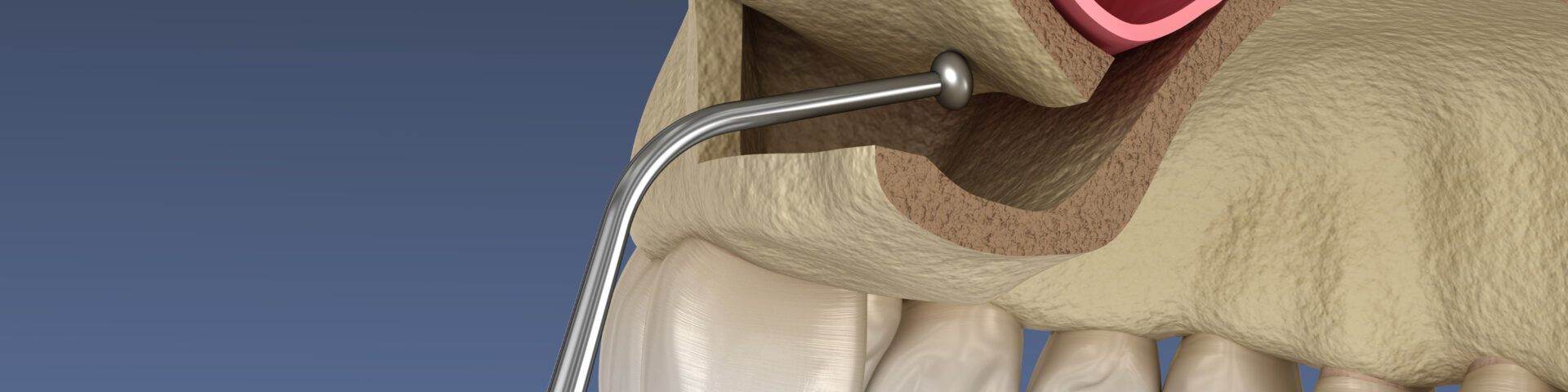
A sinus lift creates space between your sinus floor and the upper jaw bone, then fills that space with grafting material that eventually becomes your own natural bone. The procedure requires careful manipulation of the Schneiderian membrane, which is the delicate lining that covers the interior of your maxillary sinus cavity.
Your provider accesses the sinus through one of two approaches depending on how much bone remains. The lateral window technique involves creating a small opening in the outer wall of your sinus, then gently lifting the membrane to create space for bone graft material. The transcrestal approach works through the ridge itself, using specialized instruments to elevate the sinus floor without creating a lateral window.
Choosing Between Surgical Approaches
The amount of bone you currently have determines which technique your provider will recommend. If your residual bone height measures greater than five millimeters, the transcrestal approach typically provides excellent results with minimal invasiveness. This method involves less surgical exposure, shorter procedure time, and reduced postoperative discomfort.
When residual bone height falls below five millimeters, the lateral window approach becomes more appropriate. This technique allows your provider to achieve bone height increases exceeding nine millimeters, which is often necessary when significant bone loss has occurred. The lateral window also provides better visualization during the procedure, reducing the risk of complications and allowing precise membrane elevation.
Bone Grafting Materials That Support Implants
Several grafting materials can promote bone formation during sinus augmentation. Autogenous bone harvested from your own body represents the gold standard because it possesses osteogenic, osteoconductive, and osteoinductive properties. However, harvesting autogenous bone requires an additional surgical site and increases overall procedure complexity.
Xenografts derived from bovine sources and allografts from human donors provide osteoconductive scaffolds that support new bone formation without requiring secondary surgical sites. Alloplastic materials offer synthetic alternatives that eliminate concerns about disease transmission. Many providers combine different graft types to optimize volumetric stability while minimizing complications. Adding xenografts to autogenous bone, for instance, improves long-term stability of the augmented area.
Advanced Technologies Improving Outcomes
Modern sinus lift procedures benefit from technological advances that reduce complications and improve patient comfort. Piezoelectric instruments use ultrasonic vibrations to precisely cut bone while protecting soft tissues like the Schneiderian membrane. This technology significantly reduces membrane perforation rates compared to traditional rotary instruments.
Cone-beam computed tomography allows thorough presurgical evaluation of your sinus anatomy, identifying potential complications before surgery begins. Three-dimensional imaging reveals membrane thickness, presence of sinus septa, blood vessel locations, and exact measurements of available bone. This detailed planning minimizes intraoperative surprises and allows your provider to select the optimal surgical approach.
What to Expect During Recovery
Following your sinus lift procedure, you may experience swelling, mild discomfort, and nasal congestion as your body begins the healing process. These symptoms typically resolve within several days and can be managed with prescribed medications and proper aftercare. You should avoid blowing your nose, drinking through straws, or any activity that creates pressure changes in your sinuses during the initial healing period.
The grafted bone requires several months to integrate fully with your existing bone structure before implant placement can proceed. During this time, your body gradually replaces the graft material with your own natural bone through a process called creeping substitution. Most patients can have implants placed approximately four to six months after sinus augmentation, though your specific timeline depends on individual healing factors.
Preventing Complications Through Proper Planning
A comprehensive evaluation before surgery significantly reduces complication risks. Your provider assesses several anatomical factors that influence surgical complexity and success rates. Membrane thickness between one and two millimeters provides optimal conditions, while thickness exceeding five millimeters may indicate sinus obstruction requiring treatment before augmentation.
The presence and location of sinus septa affect surgical planning because these bony ridges can complicate membrane elevation. The diameter and course of blood vessels within the sinus wall require identification to prevent bleeding complications during window preparation. Understanding these anatomical variations allows your provider to modify surgical technique appropriately, ensuring the safest possible procedure.
Restoring Function with Implant-Supported Restorations at Colonia Dental Associates
At Colonia Dental Associates, we combine advanced surgical training with comprehensive restorative capabilities to provide complete implant solutions. Our practice offers the full spectrum of cosmetic dentistry services, including dental crowns, dental bridges, and complete smile reconstruction. Dr. Singh and Dr. Apratim have completed the prestigious Rutgers University American Academy of Implant Dentistry MaxiCourse, ensuring you receive care based on the latest evidence and techniques.
Whether you need single tooth replacement or full arch rehabilitation, sinus lift procedures make implant treatment possible when bone loss would otherwise prevent it. Contact us today to schedule a comprehensive evaluation and discover how we can restore your smile with stable, natural-feeling dental implants.