
What Is Dental Bonding and Is It Right for You?
A small chip, a stubborn gap, a tooth that seems slightly off compared to the rest of your smile — these are the kinds of details that stay with you even when no one else notices. The good news is that one of the most effective ways to address these concerns requires no surgery, no lab-fabricated restoration, and often just a single appointment. Dental bonding offers patients a fast, accessible path to a more polished smile, and for many, it is exactly the right solution.
At Colonia Dental Associates, we help patients throughout the Woodbridge, NJ area find the most practical route to the smile they want. Dr. Gurjinder Singh and Dr. Ashlee N. Apratim have each practiced at the practice for nearly a decade and bring a thoughtful approach to every consultation. Both doctors have completed the internationally esteemed Aesthetic Advantage Dentistry course and hold Associate Fellow status with the American Academy of Implant Dentistry. When patients come in curious about improving their smile, we take the time to walk through every option available to them, including our full range of cosmetic dental services, so they leave with a clear picture of what is possible.
How Dental Bonding Works
Dental bonding is a cosmetic procedure in which a tooth-colored composite resin is applied directly to a tooth, sculpted to correct a specific issue, and hardened in place using a curing light. The resin is carefully color-matched to the surrounding teeth so the result looks natural and cohesive. One reason bonding is so widely used is that it typically requires little to no enamel removal, making it one of the most conservative cosmetic options available.
A 2021 clinical study published on PubMed evaluating composite resin restorations for diastema closure and tooth recontouring found an overall survival rate of 90.3% over a four-year period, with a mean survival duration of over 46 months. For cosmetic applications like bonding, this means the material holds up well with proper care. Most bonding appointments are completed in a single visit, and anesthesia is generally only needed if a decayed area is being treated at the same time.
What Conditions Can Bonding Correct?
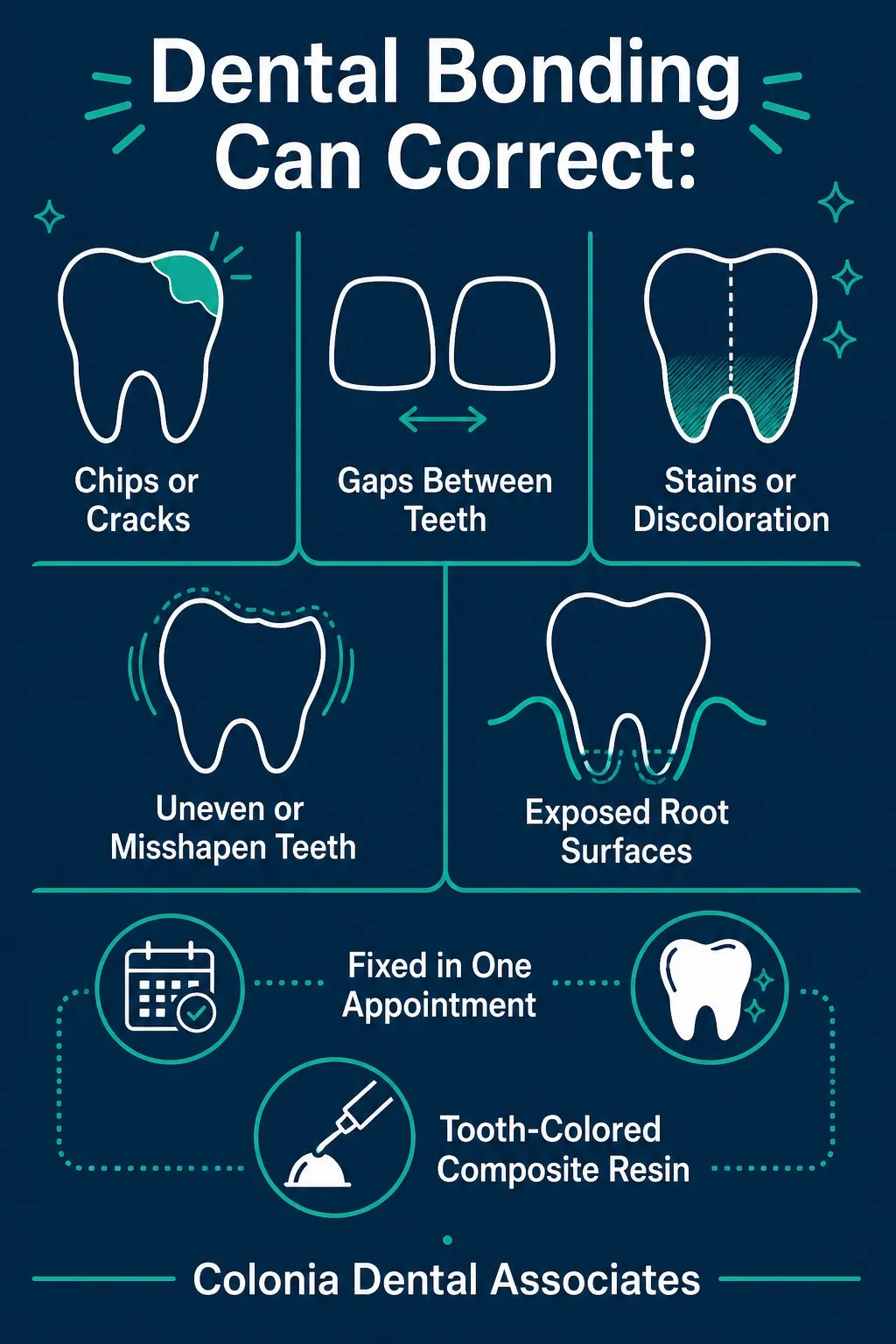
Dental bonding is a versatile treatment, and we use it to address a variety of cosmetic concerns in a single appointment. Here are some of the most common situations where bonding is an appropriate choice:
- Chipped or cracked teeth: bonding rebuilds the missing portion to restore a smooth, even edge
- Gaps between teeth: small spaces between front teeth can be closed without orthodontic treatment
- Discoloration: teeth that have not responded to whitening can be covered with a matched resin layer
- Misshapen teeth: bonding adds contour to a tooth that appears too small or uneven compared to its neighbors
- Exposed root surfaces: when gums have receded, bonding helps protect the sensitive area and improve appearance
Each of these situations involves a minor concern that bonding can address efficiently, though we always evaluate the full picture of your oral health before recommending any treatment.
Does Dental Bonding Last?
Bonding typically holds for three to ten years, depending on where it is placed and how well it is cared for. Teeth that experience greater biting force tend to wear down bonding material faster than front teeth treated for cosmetic reasons. Simple habits like avoiding hard candies and ice, and using your teeth to open packaging, can go a long way toward extending the life of your bonding.
Is Dental Bonding the Right Choice for You?
Bonding works best for patients looking to correct minor cosmetic issues without a significant time or financial investment. It is an excellent option when the concern is isolated, such as a single chipped tooth or a small gap, rather than a broader smile concern spanning several teeth. For patients with more significant discoloration, structural damage, or multiple teeth in need of improvement, we may recommend porcelain veneers or tooth-colored fillings as a more comprehensive solution.
Good candidates for bonding have healthy teeth and gums with no active decay or periodontal concerns. We address any underlying issues before proceeding with cosmetic work, ensuring the results have the best possible foundation. Bonding is also a popular starting point for patients who want to see a cosmetic improvement before committing to a more permanent option, since the natural tooth structure remains largely intact throughout the process.
Talk to Our Team at Colonia Dental Associates
If you have been wondering whether dental bonding could improve your smile, the first step is a conversation with our team. At Colonia Dental Associates, we take time to understand what you want from your smile and walk through the full range of Woodbridge cosmetic dentistry options that make sense for your specific situation. There is no pressure and no generic treatment plan — just honest guidance from a team that takes pride in helping each patient reach a result they feel good about.
To find out whether dental bonding is right for you, reach out to our office to schedule a consultation. We look forward to helping you take the next step toward the smile you have been thinking about.