Many patients are surprised to learn that a healthy smile sometimes starts with the sinuses rather than the teeth. When the upper back jaw does not have enough bone to support a dental implant, a sinus lift can rebuild that foundation and make implant placement possible again.
At Colonia Dental Associates, Dr. Gurjinder Singh performs sinus lift procedures for patients in Colonia and Woodbridge, New Jersey who need additional bone volume in the upper jaw before receiving dental implants. This procedure is not something every general dental office offers in-house, and even some oral surgeons and periodontists refer it out, but our team walks patients through every step so they understand exactly what to expect before, during, and after treatment.
What Is a Sinus Lift?
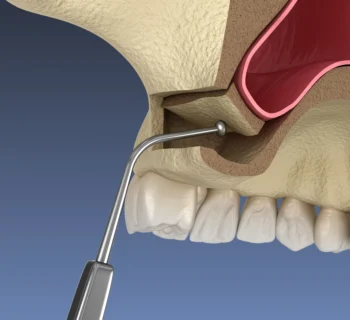
A sinus lift, also called sinus augmentation, addresses a common problem in the upper back jaw. The maxillary sinuses sit just above the roots of the upper molars, and when bone in this area is too thin or too short, there is not enough room to anchor an implant securely.
During the procedure, a small amount of bone is gently moved at the floor of the sinus, and the space is filled with graft material. Over the following months, that graft matures into solid, functional bone capable of supporting a dental implant. A collagen membrane is placed over the treated area to support healing, and in some cases, the implant itself can be placed during the same appointment depending on the individual’s bone structure.
Why the Upper Jaw Often Needs Extra Support
The upper back jaw naturally has less dense bone than other areas of the mouth, and that bone can shrink further over time. When a tooth has been missing for a while, the sinus can gradually drop lower into the space once occupied by the tooth root, reducing the bone available for an implant. Even patients who have not lost a tooth recently may still need a sinus lift due to natural anatomical variation in sinus size and position.
Lateral Window Versus Crestal Sinus Lift Techniques
There are two main approaches to sinus lift surgery, and which one is used depends on how much additional bone height is needed. The lateral window technique creates a small opening in the side of the jawbone to access the sinus directly, and it is generally used when a patient needs a more significant amount of bone added. The crestal technique works through the same site where the implant will be placed, making it a less invasive option that is often appropriate when only a modest amount of vertical augmentation is needed.
Dr. Singh reviews each patient’s imaging to determine which approach fits their bone structure and treatment goals, and explains the reasoning behind that recommendation during the consultation.
Who Would Benefit From a Sinus Lift?
Not every implant patient needs this procedure, but it becomes necessary when imaging shows insufficient vertical bone height in the upper jaw, generally less than 8 millimeters. Our team uses 3D imaging to evaluate bone volume with precision before recommending any oral surgery or bone grafting procedure.
Patients considering implant-supported dentures or single-tooth implants in the upper back jaw are the most common candidates for this procedure. A thorough evaluation helps determine whether a sinus lift, a different bone grafting approach, or no additional preparation at all is the right path forward.
What Happens During the Procedure?
Treatment begins with a review of vitals and medical history, along with a discussion of risks, benefits, and alternatives so patients can give informed consent. Local anesthesia keeps the area comfortable throughout treatment, and the gums are then opened to access the floor of the sinus.
Certain health conditions can affect candidacy for this procedure, including uncontrolled diabetes, tobacco use, some chemotherapy or autoimmune medications, active sinus infections, and osteoporosis treated with bisphosphonates. As with any surgical procedure, there are risks, such as swelling, bleeding, or, in rare cases, a small perforation of the sinus membrane.
Research comparing grafted and non-grafted sinus lift techniques has found no increased risk of implant failure or lasting complications such as sinusitis following an intraoperative perforation, and when performed on healthy patients, sinus lifts are considered a safe and routine procedure with a strong track record of success.
How Long Is Recovery After a Sinus Lift?
Healing after a sinus lift typically takes four to six months before the graft has matured enough to support an implant. This timeline allows the newly placed bone to integrate fully, creating a stable foundation for long-term implant success.
Once healing is complete, patients can move forward with implant placement or the next phase of their restorative treatment plan. Our team monitors progress throughout this period to confirm the site is ready before any further procedures begin.
Schedule Your Sinus Lift Visit to Colonia Dental Associates Today
A sinus lift can be the difference between putting off implant treatment and finally restoring a complete, functional smile. Dr. Singh performs this procedure himself, and both Dr. Singh and Dr. Ashlee N. Apratim hold Associate Fellow status with the American Academy of Implant Dentistry, having completed the AAID MaxiCourse at Rutgers University, so either doctor can evaluate whether a sinus lift is the right next step in your implant treatment.
We accept CareCredit and Cherry financing to help make sinus lift and implant treatment more manageable, and our front desk team is happy to walk through insurance and payment options during your visit. If you have been told you need more bone before receiving an implant, reach out to us to schedule a consultation with Dr. Apratim and Dr. Singh.
FAQs
What is a sinus lift?
A sinus lift, also called sinus augmentation, is a procedure that adds bone to the upper jaw beneath the maxillary sinuses so there is enough bone volume to support a dental implant.
Why would I need a sinus lift before getting a dental implant?
Implants need a stable amount of bone to anchor into. If imaging shows the upper jaw does not have enough height or density in that area, a sinus lift rebuilds that foundation before or during implant placement.
What is the difference between a lateral window and a crestal sinus lift?
A lateral window sinus lift accesses the sinus through a small opening in the side of the jawbone and is typically used when more bone height is needed. A crestal sinus lift works through the same site as the implant and is a less invasive option for smaller amounts of augmentation.
How do I know which technique is right for me?
Dr. Singh reviews 3D imaging of your jaw and sinuses to measure existing bone height and determine which approach fits your specific anatomy and treatment goals.
How long does recovery take after a sinus lift?
Healing typically takes four to six months before the graft has matured enough to support a dental implant, though initial discomfort from the procedure itself usually resolves much sooner.
Can the implant be placed at the same time as the sinus lift?
In some cases, yes. If there is enough existing bone to stabilize an implant, it can be placed during the same appointment as the sinus lift. Otherwise, the implant is placed after the graft has fully healed.
Is a sinus lift a safe procedure?
Yes, when performed on healthy patients, sinus lifts are considered a safe and routine part of implant treatment with a strong track record of success. As with any surgical procedure, there are some risks, which Dr. Singh will review with you during your consultation.
Who is not a good candidate for a sinus lift?
Certain health conditions can affect candidacy, including uncontrolled diabetes, tobacco use, some chemotherapy or autoimmune medications, active sinus infections, and osteoporosis treated with bisphosphonates. A consultation will determine whether these apply to you.