
Sinus Lifts and Bone Grafting: Advanced Implant Solutions for Complex Cases
Being told you don’t have enough bone for dental implants can feel like a dead end. For many patients in the Woodbridge area, years of tooth loss, bone resorption, or changes in the upper jaw have left insufficient bone volume to support implant placement — and that news can be discouraging. The good news is that modern dentistry has advanced well beyond that limitation, and procedures like sinus lifts and bone grafting have made implants a viable, long-term solution for patients who once had no options.
At Colonia Dental Associates, we perform these advanced procedures as part of a comprehensive approach to implant care. Dr. Ashlee N. Apratim and Dr. Gurjinder Singh are both Associate Fellows of the American Academy of Implant Dentistry who have completed the prestigious Rutgers University AAID MaxiCourse — hundreds of hours of post-graduate training in implant dentistry and prosthetics. For patients throughout Colonia and Woodbridge considering dental implants, our team has the expertise to handle even the most complex bone-deficiency cases with precision and care.
Why Bone Volume Matters for Implant Success
A dental implant functions like a titanium root, anchoring directly into the jawbone and fusing with it through a process called osseointegration. For this to work, there must be adequate bone height, width, and density at the implant site. When a tooth is lost, the surrounding bone begins to resorb, or shrink, over time. In the upper jaw, this process is compounded by the proximity of the maxillary sinuses — the hollow spaces above the back teeth — which expand downward as bone recedes, leaving very little room for implant placement.
Without sufficient bone, implants cannot achieve the stability needed to support a crown, bridge, or full-arch restoration. This is why bone-building procedures are a critical first step for many patients. A 15-year retrospective study published by the National Institutes of Health tracked 757 implants placed on grafted maxillary bone and found that sinus augmentation paired with bone grafting produced consistent, long-term implant success across multiple graft material types, validating these procedures as a reliable pathway to implant placement even in challenging cases.
What Is a Sinus Lift?
Understanding the Procedure
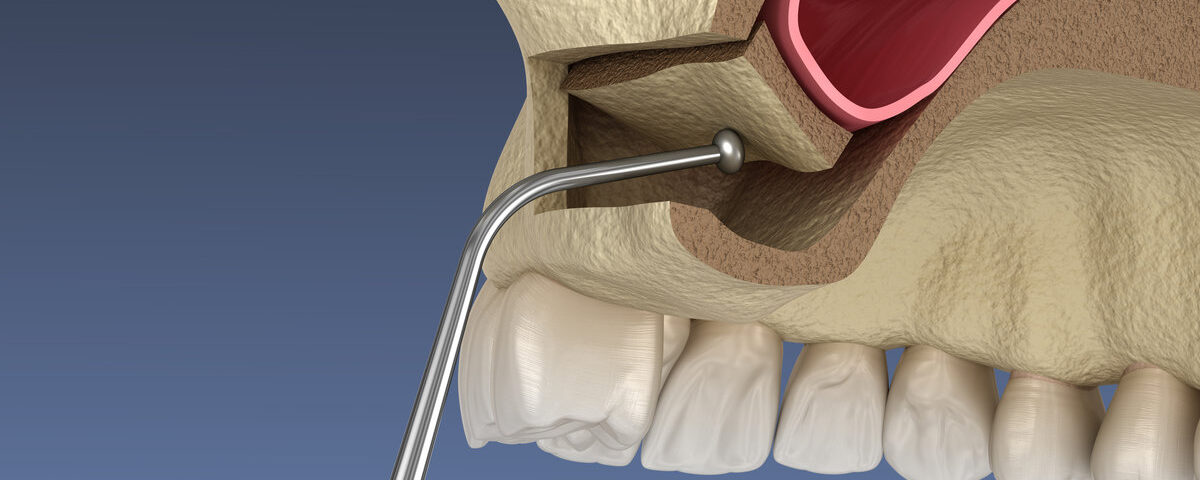
A sinus lift, also called sinus augmentation, is a surgical procedure that creates additional bone height in the upper jaw by gently lifting the floor of the maxillary sinus and placing bone graft material in the newly created space. As the graft heals over several months, it integrates with the natural bone, producing a stable, dense foundation for implant placement. The procedure is typically performed when the residual bone height in the posterior upper jaw is insufficient for safe implant placement without encroaching on the sinus cavity.
When Is a Sinus Lift Necessary?
Patients who have experienced tooth loss in the upper back region of the mouth — particularly the premolars and molars — are the most common candidates for this procedure. The longer teeth have been missing, the more bone resorption has typically occurred. Patients who have worn dentures for an extended period, those with a naturally large sinus cavity, or those who lost teeth as a result of gum disease are also frequently in need of sinus augmentation before implants can be placed. Our oral surgery team evaluates each patient with advanced digital imaging to assess bone volume and determine the most appropriate surgical approach.
What Is Bone Grafting?
Bone grafting is a broader term for any procedure that adds bone or bone-stimulating material to a deficient area of the jaw. While sinus lifts specifically address vertical bone loss in the upper posterior jaw, bone grafting can be performed throughout the mouth — including in the lower jaw, at extraction sites, or along the ridge where a tooth once sat. The graft material serves as a scaffold that encourages the body to generate new, natural bone in areas where it has been lost.
Several types of graft material may be used depending on the case, including bone sourced from the patient’s own body, processed donor bone, or advanced synthetic materials that closely mimic natural bone structure. At Colonia Dental Associates, our selection of graft materials reflects our commitment to modern dental materials and quality, ensuring that each patient receives the most effective option for their specific anatomy and clinical needs.
The Path From Grafting to Final Restoration
For most patients, bone grafting or sinus augmentation is the first phase of a multi-stage implant treatment plan. After the graft is placed, a healing period of several months is required to allow the new bone to mature and consolidate. Once adequate bone volume is confirmed through follow-up imaging, implants are placed and allowed to integrate with the bone before the final restoration is attached. This staged approach, while requiring patience, produces the most stable and durable implant outcomes possible. The final result — a natural-feeling implant topped with a precisely crafted dental crown — is designed to function and look indistinguishable from a natural tooth.
Trust Complex Cases to an Experienced Team
Not every dental practice has the training or equipment to perform sinus lifts and bone grafting in-house. These procedures require an experienced dentist with a background in complex dental work, advanced surgical techniques, and a thorough understanding of implant biomechanics. Patients who attempt to pursue implants without addressing underlying bone deficiencies risk implant failure, prolonged complications, and the need for more extensive corrective treatment down the road.
Begin Your Implant Journey With Colonia Dental Associates
Dr. Apratim and Dr. Singh have dedicated significant post-graduate training specifically to implant dentistry and prosthetics, giving patients throughout the Woodbridge area access to a level of surgical and restorative expertise that produces consistently exceptional outcomes. From the initial evaluation through final restoration, every phase of your treatment is guided by a team that takes the time to understand your goals, explain your options, and build a plan that’s right for you. If you’ve been told in the past that you’re not a candidate for implants, we encourage you to come in for a second opinion. Contact our office today to schedule your consultation with Colonia Dental Associates.