
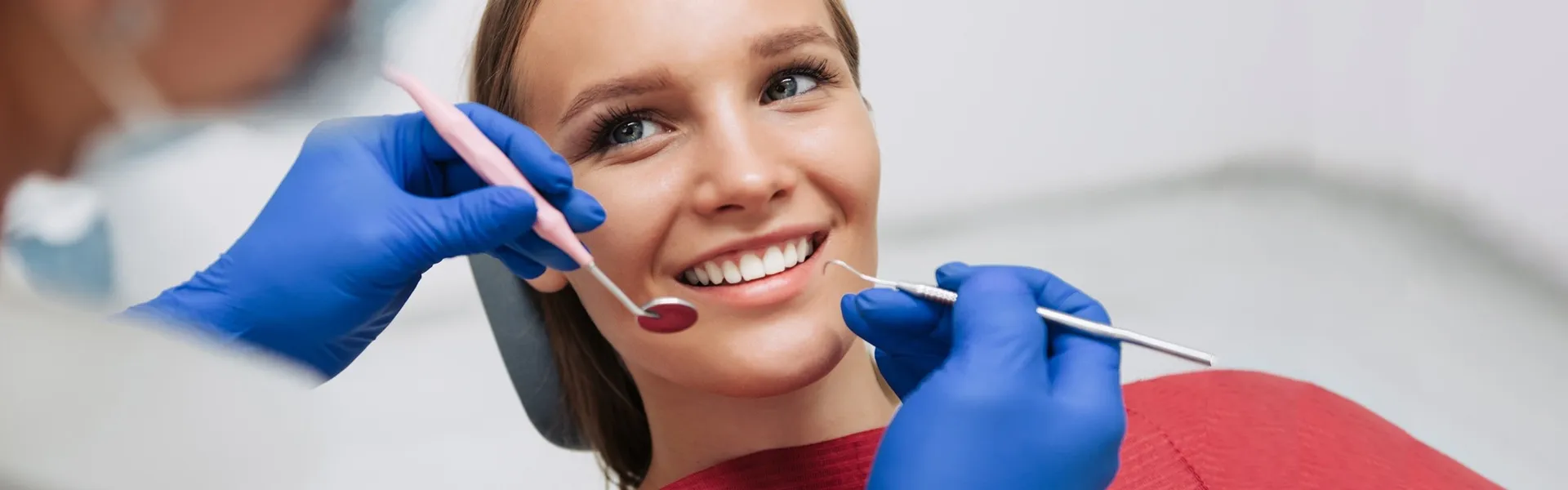
Dental Exams And Cleanings Benefit Your Overall Health besides Your Dental Health

If you avoid dental visits for exams and cleanings, you are damaging not just your oral health but also your overall health. The well-being of your teeth and mouth are essential to your overall health and your entire body. Regular brushing and flossing are crucial to keeping your smile appearing beautiful. However, neglecting six-monthly dental visits recommended by the American Dental Association puts your dental and overall health at risk.

What Happens During Dental Exams?

The dental examination procedure is not fearsome because the dentist examines your mouth for incidences of tooth decay, gum disease, bad breath. During the exam, your dentist takes x-rays if you are visiting them after a year. The x-rays help dentists to view beneath the surface of your teeth and gums and detect issues not visible to the naked eye.

Dentists also perform exams for oral cancer screenings during your dental visit as a method of preventive care. It doesn’t mean you are affected by this dreadful disease but is merely an examination to confirm you don’t have any abnormal or cancerous lesions in your mouth.

Preventive dental care by undergoing dental exams and cleanings don’t require multiple appointments and is completed within the hour. After the dentist conducts the dental exam, the dental hygienist takes over your teeth cleaning procedure.

The Teeth Cleaning Procedure

The dental hygienist’s from the teeth cleaning dental clinic start the cleaning procedure using tiny mirrors to guide them besides a scaler helpful for plaque and tartar removal around your gum line and between your teeth. You can expect to hear scraping sounds which you may not like. However, if you have excessive tartar buildup on your teeth, you will likely hear more scraping making you believe you must brush and floss your teeth using proper techniques.

Polishing your teeth with gritty toothpaste and an electric toothbrush is the next step of the cleaning procedure. Here again, you experience grinding noises making you uncomfortable. However, polishing is an excellent method to deep clean your teeth and remove any leftover plaque and tartar.

The hygienist also provides a demonstration of flossing regardless of whether you floss at home or not. Dental hygienists reach deep between your teeth to detect troublesome spots from where your gums may bleed.

After the flossing demonstration, you can rinse your mouth and prepare yourself for fluoride treatment, the last step of the cleaning process. Fluoride protects your teeth by strengthening the enamel helping you battle cavities for several months.

It is essential that you understand the importance of dental examination and how it can help you remain on top of your dental and overall health. The description provided below will convince you why you mustn’t neglect dental visits every six months to keep yourself in optimal health.

Transform Your Smile Today

Book NowCall Now

The Importance of Dental Exams and Cleanings

You must schedule professional dental exams and cleanings twice a year while x-rays are scheduled once. However, depending on what your dentist or hygienist observes in your mouth, they may perform other exams during your visit.

Children also need similar exams and cleanings. In addition, dentists recommend preventive measures like molar sealants on children’s teeth to help prevent cavities in the difficult to brush areas.

If you have neglected dental exams and cleanings for long and have excessive plaque and tartar buildup on your teeth besides bleeding from the gums, you likely have gum disease affecting you, requiring more frequent visits to dentists to control the infection.

Gum disease is entirely preventable with regular brushing, flossing, and examinations by your dentist. Early stages of gum disease are reversible with routine cleanings and proper dental hygiene. However, allow the condition to progress to periodontal disease, and your only option is to maintain the disease by receiving regular treatments from your dentist besides adopting an oral hygiene regimen helpful in preventing the infection from aggravating.

If you have advanced periodontal disease, expect the bacteria in your mouth to invade your bloodstream to cause various health problems requiring treatment from different medical professionals for conditions like cardiovascular disease, respiratory disease, osteoporosis, and cancer. You undoubtedly wouldn’t want to spend additional time and money you can ill afford on various treatments merely because you didn’t care for your oral health, would you?

Do not consider dental visits for exams and cleanings as an unnecessary expenditure. On the contrary, the visits help you save time and money and prevent extreme issues in your mouth and body merely by undergoing an inexpensive exam and cleaning.

Frequently Asked Questions About Dental Exams and Cleanings

How often should I schedule dental exams and cleanings?

Most patients should schedule professional exams and cleanings twice a year, with x-rays typically taken once annually. Your dentist may recommend more frequent visits depending on your individual gum health and risk factors.

Does a dental cleaning hurt?

Most patients experience only mild sensitivity to scraping and polishing sounds rather than actual pain. If you have significant tartar buildup or sensitive gums, let your hygienist know so they can adjust their approach for your comfort.

Can gum disease really affect my overall health?

Yes. When periodontal disease advances, bacteria from the gums can enter the bloodstream and has been associated with systemic conditions affecting cardiovascular and respiratory health. Regular cleanings help prevent gum disease from reaching this stage.

Do children need the same exam and cleaning schedule as adults?

Children generally follow a similar twice-yearly schedule for exams and cleanings. Dentists often recommend additional preventive measures for kids, such as molar sealants, to protect the hard-to-clean chewing surfaces of back teeth from cavities.

What happens if I skip cleanings for a long time?

Skipping cleanings allows plaque and tartar to build up, which increases the risk of gum disease and cavities. If you notice bleeding gums or heavy tartar buildup after a long gap between visits, your dentist may recommend more frequent appointments initially to bring your oral health back on track.

WHAT IS A DENTAL EMERGENCY?

Have you experienced pain in your tooth and you knew that you could not wait to see a dentist? The pain would be so severe that you would give anything to see a dentist. If you experience something like this, you need to see an emergency dentist.

Dental pains are very dreadful. Depending on the degree of the problem, they could seem life-threatening sometimes. People who have experienced this pain understand how pain in a tooth can render a person unable to perform other duties. To see a dentist, you need to first make a call to schedule an appointment at a later date. However, some pains cannot wait to see a dentist. They are so excruciating and you need to see a specialist. Emergency dental services are available to help people who find themselves in dire need of a dentist. Different medical centers offer emergency dental care for everyone whether you are registered in the hospital or not. You can make a call to book an emergency appointment and be at the hospital in less than 30 minutes.

Since dentists and emergency dentists both attend to people with dental problems, most people find it hard to differentiate situations that need the attention of a dentist from the ones that need the attention of an emergency dentist. There are some signs of emergency dental care that you need to watch out for. When you see these signs, you know that your condition is a dental emergency and you need to see an emergency dentist.

Transform Your Smile Today

Book NowCall Now

Signs of a Dental Emergency

Being able to know whether to wait for a dentist or to see an emergency dentist will help you to get to the root of your problem and get it solved as soon as possible. There are two types of dental emergencies. The first one is obvious. When you find yourself in such a situation, you cannot wait to see a dentist. However, the other type of dental emergency can be confusing. You might think that the issue can wait when indeed you need to see an emergency dentist immediately. Here are some issues that require a dental emergency.

  1.  Severe Toothache: If you develop toothache all of a sudden and the pain begins to get unbearable, it means that something is wrong and you need to see a dentist immediately. At this point, if it is out of work hours, you might not even be able to get across to your dentist because the dentist will be out of the office. You can find a qualified emergency dentist’s office where you can call and schedule an immediate appointment. As soon as you schedule the appointment, the hospital will be to make preparations for your arrival.
  2. Bleeding: No one likes the sight of blood gushing out from their body. When you begin to see blood gushing out of your mouth, rather than panic, call an emergency doctor and schedule an appointment.
  3. Knocked-Out Tooth: For certain reasons, a tooth can get knocked out of the mouth. To save the tooth and have a chance at inserting it back into the mouth, you need to see an emergency dentist in less than 30 minutes. First, hold the tooth by the crown, then rinse the tooth to remove any dirt from it. After rinsing it, insert the tooth back in its position and try to hold it in that position till you get to the dentist’s place. If you cannot do this, keep the tooth in a container or in a cup of milk to preserve it till you see an emergency dentist.
  4. Broken or Chipped Tooth: If a part of your tooth is broken, fractured, or shaking, you also need the attention of an emergency dentist. Before you get to the dentist, apply a cold compress to the spot of the affected tooth to stop the spot from swelling. Also, you can use warm water to rinse the mouth.
  5. Infection: when you have a tooth infection, it can cause you to feel severe pain all of a sudden. An emergency dentist will always be available to attend to you and give you emergency dental care.

Other situations require emergency dental services, so if you are not sure about something, call your dentist to confirm whether you need to see an emergency dentist or you wait to see the dentist.

How to Solve Problems with Your Dental Sealants?

Most children will likely develop cavities on the chewing surfaces of their back teeth or molars. The surfaces of the molars are not smooth as other areas of the teeth and are populated by pits and fissures, helpful to trap food particles and bacteria. Unfortunately, toothbrush bristles can’t reach into these tiny crevices, creating perfect conditions for tooth decay.

Newly emerged children’s molars are not as resistant to tooth decay as adult teeth—the hard outer layer of the enamel protecting the teeth changes with age to become stronger. Children receive help from fluoride available in toothpaste and water or topical treatments from dental offices to strengthen their enamel. Unfortunately, even fluoride can’t get into tiny crevices regularly. Thankfully an alternative solution is available to deal with tooth decay with dental sealants.

Dental sealants are plastic layers painted on the chewing surfaces of the back teeth, making them resistant to decay. As a result, a tooth with dental sealants is less likely to develop cavities that require expensive dental treatment and, most importantly, cause discomfort to your child.

The Placement of Dental Sealants

Dental sealants dental states you may think of the plastic layer as a mini plastic filling but must reassure your child that it isn’t similar to having a cavity filled. The placement of dental sealants is entirely painless because the tooth enamel does not contain any nerves. Initially, the dentist providing the sealants examines the tooth or teeth that need sealing. If they observe any minimal decay, it is gently removed. The tooth is then cleaned and dried.

Dental sealants service will then apply an etching solution to slightly rough the surface to help the sealant adhere better to the tooth. Next, the tooth is again rinsed and dried before painting the plastic resin on the tooth and hardening it in minutes with the help of ultraviolet light.

Dental sealants protect against 80 percent of cavities for the first couple of years after application. The protection continues against 50 percent of cavities for four years of the application. After that, the sealant remains on the child’s teeth for approximately nine years. However, more often than not, dental sealants need re-application because they are prone to chipping and wearing off.

Transform Your Smile Today

Book NowCall Now

Problems Associated with Dental Sealants

In 2012 research received widespread coverage in the media, raising concerns that trace amounts of bisphenol A found in some dental resins may contribute to behavioral problems among children. The authors, however, confirmed they had not proven that the BPA in dental sealants treatment caused these problems. In reality, the prevalence of BPA is far higher in food and beverage packing and many other dental restorative materials. Thereafter the American Dental Association and the American Academy of pediatric dentistry have both reaffirmed support for the use of dental sealants.

Besides the above, the most significant problem associated with dental sealants is the chipping and wearing off after the application. However, parents encouraging their children to brush and floss appropriately and visiting dentists for routine exams and cleanings comfortably overcome this problem when they have dental sealants reapplied on the child’s teeth by the dentist.

How Do Dental Sealants Benefit Children?

Research conducted by the CDC confirms that children without dental sealants are three times more likely to develop cavities to report lost school time because they cannot eat, sleep, or indulge in other activities. In addition, children without sealants need expensive dental treatments comfortably avoidable by parents by having their child’s teeth sealed. Furthermore, the placement of dental sealants doesn’t cost a great deal requiring merely $ 30-$ 60 per tooth to protect the tooth for nearly a decade.

Parents must understand tooth decay is an entirely preventable disease but is the leading cause of tooth loss among children and adults. Adults can also have dental sealants on their teeth if they aren’t affected by any dental conditions and have unrestored teeth. However, children’s molars emerging at age six and 12 are best protected by coating dental sealants as a preventive measure against tooth decay.

Dental sealants are an excellent method of decay prevention all parents must consider for their child. Getting the child to maintain excellent dental hygiene, preventing them from frequently snacking on sugary foods and beverages, and visiting dentists for routine exams and cleanings every six months are also essential even after children’s teeth are sealed. It helps parents overcome the problems associated with dental sealants comfortably without concerns.

Dental Crowns Offer Many Benefits: Here Are Five That You Cannot Ignore

Are you considering getting one or more dental crowns and looking for information about the benefits they offer? If you think having dental crowns placed over one or more of your teeth, you likely have damaged teeth. It is why they need reinforcement to make them more robust again. While it is excellent that you are proactive with your oral health, it is also necessary that you do everything possible to keep all your teeth in your mouth as long as possible. Your teeth are meant to last for a lifetime.

Dental implants are famous for creating beautiful smiles, but they are capable of doing much more. Smile makeovers are not the only reason for using dental crowns because these tooth caps also help repair teeth that would otherwise need removal. Dentists and patients prefer dental crowns because they are sturdier than other cosmetic and restorative dental treatments. However, as you are looking for dental crowns’ benefits, let us provide five that you will find difficult to ignore.

Dental Crowns Can Preserve a Severely Damaged Tooth

Tooth decay, stress, and trauma can wreak havoc on the exterior of the tooth. At times a tooth becomes weak and brittle, leaving the dentist merely two options. The dentist can either recommend extraction or offer dental crown services to save the tooth. If you favor preserving the tooth, the dentist cleans and fills the tooth preparing it for the crown. You must wait for a couple of weeks to have a customized dental crown. However, after the dentist installs the permanent crown on your tooth, it becomes reinforced and regains its strength, similar to a healthy tooth. You regain the full functionality of the tooth.

Tooth Caps Prevent a Dead Tooth from Breaking Apart

Infections of the tooth pulp are known as pulpitis. The infection is irreversible, causing the death of the inner tooth. Dentists can treat the infection by removing the dental pulp performing root canal therapy. After the procedure, the dentist restores the tooth either by a permanent filling or a dental crown. If you have undergone root canal treatment on a molar, a dental crown is an appropriate solution to prevent it from breaking.

Dental Crowns Are Permanent Restorations

When you decide to have dental crowns placed over a tooth, you select a permanent option that remains in place without shifting around. Dental implant crowns have become popular among people with missing teeth looking for tooth replacement solutions with implants. Dental crowns are customized for your mouth and don’t appear out of place when fitted over dental implants.

Transform Your Smile Today

Book NowCall Now

Crowns Are Excellent to Protect a Tooth with a History of Tooth Decay

If you have a tooth that has undergone multiple dental procedures, you will find it better to have the tooth restored at the dental crown’s office instead of using fillings like dental Onlays. Dental crowns encase your entire tooth to create a barrier between the vulnerable tooth and the rest of your mouth. The barrier prevents harmful microorganisms, acids, sugars, and starch from contacting the tooth, preventing further decay.

Crowns Are Also Versatile As a Cosmetic Treatment

If you have many flaws with your teeth, you can comfortably have them concealed using tooth caps. Dental crowns can cover crooked, discolored, and chipped teeth. Dentists provide crowns to give you an even smile. These restorations help close gaps between your teeth by covering smaller teeth, making them appear larger. These options and more make dental crowns a forward treatment by cosmetic dentists for their patients.

If you have this added to have dental crowns as restorations on your decayed or damaged teeth, you must prepare yourself for a couple of appointments with your dentist. Please bear in mind that getting dental crowns is uncomfortable and requires anesthesia as the dentist prepares your tooth for restoration.

The dentist files your tooth from the front and sides to accommodate your new restoration in your mouth. After the preparation, you receive a temporary crown to wear until the dental laboratory fabricates your customized restoration.

You must visit your dentist after approximately two to three weeks when your personalized crown is very to have it bonded to your tooth. The dentist begins the procedure by removing the temporary crown and checking your customized crown for fit, shape, and color. If everything is in order, the dentist bonds your permanent crown to your prepared tooth.

After having the restorations over your teeth, you must care for them appropriately by maintaining proper oral hygiene and visiting your dentist for six-monthly exams and cleanings. Maintain the restoration properly if you want to have it in your mouth for nearly a decade.

Dental Sealants: A Foundation of Preventive Care

Dental sealants are one of the simplest, most cost-effective ways to prevent cavities before they start. A thin protective coating is painted onto the chewing surfaces of the back teeth, sealing off the deep grooves where food, plaque, and bacteria collect and where a toothbrush bristle often cannot fully reach. For children getting their first permanent molars, and for many adults with deep pits and fissures, sealants close the gap that brushing and flossing alone leave open.

As a foundation of preventive care, dental sealants work alongside fluoride treatments, good daily hygiene, sensible dietary choices, and frequent dental exams to build a complete prevention plan. At Colonia Dental Associates, we recommend sealants as part of a routine preventive visit whenever a patient’s molars have deep grooves that put them at elevated risk for decay.

Why the Chewing Surface Is the Highest-Risk Area for Cavities

Most tooth surfaces are smoothed by the natural motion of chewing and cleaned by saliva, but the pits and fissures on the top of the molars are narrow, uneven, and hard to access with a toothbrush bristle. The American Dental Association has recommended sealants as a preventive measure since 1987, and the American Dental Association continues to cite the chewing surfaces of molars as the site where the large majority of childhood cavities begin. Sealing that surface early, before decay has a chance to start, is far simpler and more comfortable than treating a cavity after it forms.

90%+

of cavities in school-age children begin in the pits and fissures of the molars

~80%

reduction in cavity risk on sealed teeth during the first two years after application

Up to 9 yrs

a well-maintained sealant can remain intact with regular monitoring

Who Benefits Most From Dental Sealants?

Sealants are most often associated with children, but they are not exclusively a pediatric treatment. Anyone with deep, narrow grooves on their molars and premolars, at any age, can be a candidate.

School-Age Children

Sealants are typically applied as soon as the permanent first and second molars erupt, usually around ages 6 and 12, when kids are still developing consistent brushing habits.

Teens and Young Adults

Patients whose molars have particularly deep grooves, or who have a history of frequent cavities, often benefit from extending sealant protection past childhood.

Adults at Elevated Risk

Adults with dry mouth, a high-sugar diet, or teeth that have never decayed but show deep anatomical grooves can also be good candidates for sealant placement.

A dentist confirms candidacy with a visual exam and, when needed, an x-ray during a routine visit, ensuring the tooth is a good fit for sealant material before recommending treatment. Parents who want to protect their child’s molars as soon as they erupt should ask about sealants at their next pediatric dental visit, particularly if their child has just gotten their first set of adult molars.

Transform Your Smile Today

Book NowCall Now

What to Expect During the Sealant Appointment

Placing a dental sealant is quick and does not require anesthesia or drilling. The steps below outline the general process a dental team follows to ensure the sealant bonds properly and holds up over time.

STEP 1

Clean and Isolate

The tooth is cleaned and kept dry with cotton, a rubber dam, or another isolation method.

STEP 2

Etch the Surface

A mild solution roughens the enamel slightly so the sealant material can bond securely.

STEP 3

Rinse and Dry

The tooth is rinsed and dried again, since any remaining moisture can cause the sealant to fail.

STEP 4

Apply and Cure

A thin, even layer of sealant is painted into the grooves and hardened with a curing light.

STEP 5

Check the Bite

The dentist checks that the sealant sits flush with the tooth so it does not interfere with a comfortable bite.

Applying the sealant material evenly and thinly matters. A layer that is too thick can create a high spot on the bite, causing discomfort once the patient starts chewing again, so dentists take care to keep the surface smooth and level with the surrounding enamel.

Sealants vs. Fillings: What Is the Difference?

Sealants and fillings solve two different problems, and understanding the distinction helps explain why sealants are considered prevention rather than treatment.

Dental Sealant Dental Filling
Applied to a healthy tooth to prevent decay Placed after decay has already damaged the tooth
No drilling or removal of tooth structure Requires removing the decayed portion of the tooth first
Thin coating on the chewing surface only Material placed into the cavity itself
Preventive, typically lower cost Restorative, cost varies with cavity size

Sealants can only be placed on a tooth that has not yet developed a cavity in that spot, which is why addressing early signs of decay quickly matters just as much as sealing healthy teeth. Once a cavity forms, a filling, not a sealant, is the appropriate treatment.

How Long Do Dental Sealants Last?

Most sealants are made from a clear or tooth-colored resin material that hardens under a curing light. With good home care and regular checkups, sealants commonly hold up for several years and can remain effective for up to nine years, though they are monitored at every routine exam because they can chip or wear down over time. If a sealant does wear away in one spot, it can typically be touched up or reapplied without removing the entire seal.

Sealants are not a substitute for fluoride or routine cleanings. They work best as one part of a layered prevention plan that also includes fluoride treatments and consistent brushing and flossing at home.

Cost and Insurance Coverage

Most dental insurance plans classify sealants as a preventive benefit and cover them at little to no out-of-pocket cost, especially for children. Patients without dental insurance still find sealants to be one of the more affordable preventive treatments available, particularly when weighed against the cost of a future filling or crown. Our team can review your specific insurance and financing options before your visit so there are no surprises about coverage.

Preventive care is one of the most effective ways to help your family avoid the cost, time, and discomfort of more involved dental treatment down the road. Sealants give the deep grooves of the molars an extra layer of protection that brushing alone cannot always provide, and they remain one of the simplest steps a family can take toward long-term oral health.

Frequently Asked Questions About Dental Sealants

How much do dental sealants cost, and does insurance cover them?

Most dental insurance plans cover sealants as a preventive benefit, often with little or no out-of-pocket cost for children. Without insurance, sealants are still one of the more affordable preventive treatments available. Our team can review your coverage and give you an exact cost estimate before treatment begins.

At what age should children get dental sealants?

Sealants are typically placed as soon as the permanent molars come in, usually around age 6 for the first molars and age 12 for the second molars. Sealing these teeth early, before a cavity has a chance to start, gives them the most protection during the years children are still developing consistent brushing habits.

Can adults get dental sealants too?

Yes. Adults with deep grooves on their molars, a history of frequent cavities, or a high-sugar diet can be good candidates for sealants. A dentist evaluates the tooth structure during a routine exam to confirm whether sealant placement makes sense at any age.

Does getting a dental sealant hurt?

No. Sealant placement does not involve drilling, numbing, or anesthesia. The process is painless and usually takes just a few minutes per tooth, which makes it comfortable for both children and adults.

Do sealants replace the need for fluoride treatments and regular exams?

No. Sealants are one layer of a complete prevention plan, not a replacement for fluoride treatments, daily brushing and flossing, or routine dental exams. Sealants specifically protect the chewing surfaces of the molars, while fluoride and cleanings support the health of the entire mouth.

Simple Procedures like Dental Fillings Don’t Require Much Time

Dental fillings are a standard procedure to fix damage from tooth decay. The process is relatively painless and is completed in about an hour. Cavities are common among adults and children in the United States. According to the National Institutes of health, adults aged between 20 and 64 have had holes in their mouths. The number of people with cavities in the United States is as high as 92 percent.

Dental fillings help prevent further decay and allows the teeth to function normally. If you want to learn more about the dental filling procedure and what to expect if scheduled for a filling, please continue reading this blog for the information you need.

What to Expect When Getting Dental Fillings

Dental fillings are a relatively straightforward procedure. Your dentist examines your mouth using instruments to check the cavity. The professional may even x-ray the tooth or teeth to determine the extent of the decay affecting your tooth.

You receive local anesthesia to numb and prevent experiencing any pain. If you need the filling on the tooth surface, you may not require anesthesia. After your tooth is entirely numb, the dentist will likely use a dental drill to remove tooth decay from the enamel. Some less common techniques like using a laser or air abrasion tools are available but not used by most dentists.

After tooth decay removal, the dentist sterilizes your tooth and prepares the same for the filling. Some materials of dental fillings are hardened with light. Eventually, the dentist polishes the tooth and checks it to ensure your bite is correct.

You experience some soreness or sensitivity in the tooth after the numbing medication wears off but shouldn’t experience any pain. You must avoid incredibly hot or cold foods, and beverages are a couple of days, but the better part can eat normally.

What Kind of Fillings Do You Receive?

Any dental clinic providing dental filling services offers different types of materials to fill cavities. Some of the most famous and widely used filling materials are the following:

Silver Colored Fillings

In reality, silver-colored fillings are metal amalgams, a combination of mercury, silver, copper, and tin. Durability is the name of these fillings than tooth-colored material. They are affordable than other materials to fill cavities. Some people have expressed concerns about the mercury in the fillings, which is confirmed as a neurotoxin. However, no clinical evidence is available to prove silver amalgam fillings are harmful, although attempts are underway to phase them out.

Transform Your Smile Today

Book NowCall Now

Tooth-Colored Fillings

Tooth-colored fillings or composites are a mix of glass and quartz particles and acrylic resin. The filling material is durable but is more expensive than metal amalgams.

Gold Fillings

Gold fillings are a mix of copper, gold, and other metals and incredibly durable while being expensive to the core. They are not aesthetically pleasing and require a couple of appointments for the filling because the dentist must have them fabricated in a lab after taking impressions of your tooth.

Porcelain Fillings

Porcelain fillings are as expensive as gold fillings but have the advantage of appearing aesthetically pleasing. These fillings are made in laboratories after your dentist takes impressions of your tooth.

How Much Is Time Required to Get Dental Fillings?

The dental filling procedure requires an hour or less. Simple fillings require about 20 minutes, while larger or multiple fillings require longer.

The kind of material you choose the filling determines whether the time required is minimal or requires a second visit.

Composite resin fillings layered into your tooth require more time but are completed in a single visit. Some composites are made from impressions of your tooth and need a second visit for the bonding.

Gold or porcelain fillings, also known as inlays and Onlays, require two visits because the dentist cannot complete the procedure in one visit. During the first visit, your dentist removes the decay and takes impressions of your tooth for the dental laboratory to fabricate your filling. You can have the filling bonded to your tooth during the second visit.

If you need an older filling replaced, the dental fillings treatment requires the same time as the original filling or more, especially if the old filling material needs drilling out. The old filling and the cavity are cleaned before inserting the new filling material.

As can be seen, the dental filling procedure doesn’t require much time and is completed in a single visit depending on the material you have chosen to have on your teeth.

How Well Can Preventive Dentistry Protect Your Oral Health?

Preventive dentistry protects your oral health by catching problems early and stopping small issues from becoming bigger, more expensive ones, and it works best as a partnership between what you do at home every day and the routine care you get from your dental team. Most people already practice some form of preventive dentistry, even if they have never used that term for brushing and flossing.

When you visit dentists in Colonia, NJ for preventive dentistry, you can expect guidance built around both of those pieces working together. This article walks through what your role looks like, what your dentist’s role looks like, and why keeping up with both matters more than most patients realize.

Your Role in Preventive Dentistry

You are expected to brush your teeth twice daily with an appropriate toothbrush and fluoride-based toothpaste. Ask your dentist if you are unsure what will work best for you. As a general rule, replace your toothbrush every three to four months, or sooner if the bristles have started to fray. When brushing, do not neglect your tongue, since harmful bacteria can hide there too, and cleaning it also helps your breath.

Flossing regularly is just as important, since brushing alone cannot reach everywhere plaque builds up between teeth. People with braces often do better with floss threaders when cleaning around brackets and wires. Dentists in Colonia, NJ can walk you through a flossing demonstration to make sure your technique is actually effective.

Rinsing with mouthwash after flossing to clear out loosened food particles is a helpful addition. Use caution with foods that are hard to chew, such as bones, hard candies, and seeds, since they can chip your teeth, and avoid smoking and other tobacco products if you want to maintain good oral health. Wear a mouthguard when playing contact sports.

The Role of Diet in Preventive Care

Your diet influences your oral health more than most patients expect. Start with simple habits like drinking enough water daily and limiting your sugar intake, since sugar feeds the bacteria that cause decay. Fruits and vegetables should make up a meaningful portion of your diet, since they supply vitamins and minerals that support healthy teeth and gums, while sticky or sugary snacks eaten throughout the day give bacteria more opportunities to produce the acid that erodes enamel.

Your Dentist’s Role in Preventive Dentistry

There are many specialties in dentistry. A general or family dentist is well equipped to provide preventive dental services to you and your family, while children benefit from getting their routine treatments from a pediatric dentist. Routine preventive care, including teeth cleanings, exams, and x-rays, is provided at the dentist’s office, and early detection makes treatment of oral disease easier and less invasive. Your dentist will also refer you to specialists for further care if needed.

Preventive dentistry in children is especially important, since the foundation for a lifetime of good oral health is laid early. Pediatric dentists teach parents and children good oral hygiene habits and offer advice on diet, and they can apply fluoride treatment and dental sealants to protect against decay on the chewing surfaces of back teeth. Adults benefit from many of the same tools; our guide on fluoride treatment for adults explains why fluoride is not just for kids.

Transform Your Smile Today

Book NowCall Now

What Happens During a Preventive Dental Visit

A typical preventive visit includes a dental exam and cleaning, along with routine x-rays taken on a schedule your dentist recommends based on your history. During the cleaning, a hygienist removes plaque and tartar buildup that brushing and flossing at home cannot fully clear, while the exam gives your dentist a chance to check for cavities, gum disease, and other developing issues before they cause pain.

Most preventive visits also include an oral cancer screening, a quick, painless check of your lips, tongue, and the soft tissues in your mouth that can catch early warning signs long before symptoms would otherwise appear. This screening is one of the more overlooked benefits of keeping up with routine dental visits.

Benefits of Preventive Dentistry

With proper preventive dental care, your risk for many dental diseases is lowered, and early discovery of the conditions that do develop helps reduce complications and treatment cost. Some medical conditions have dental manifestations as well, so routine check-ups with your dentist can help surface a potential chronic health concern that might otherwise go unnoticed for longer. The American Dental Association recommends brushing twice daily with fluoride toothpaste and cleaning between teeth once a day as the foundation of a preventive routine, paired with regular professional visits.

Schedule Your Next Preventive Visit

Preventive dentistry works because it is consistent, not because any single visit or habit does all the work on its own. Keeping up with your part at home and your regular visits with our team gives you the best chance of avoiding the more involved, more expensive treatment that untreated problems eventually require.

Contact our team to schedule your next cleaning and exam and keep your preventive care on track.

Frequently Asked Questions About Preventive Dentistry

How often should I get a preventive dental checkup?

Most patients with good oral health benefit from a cleaning and exam every six months. Patients with a history of gum disease or other risk factors may need more frequent visits, which your dentist can recommend based on your specific history.

Are dental sealants only for children?

Sealants are most commonly placed on children’s back teeth soon after they erupt, but adults with deep grooves in their molars and no existing decay can also benefit from sealants as an added layer of protection.

Do I still need dental x-rays if my teeth feel fine?

Yes. Many early cavities and bone changes below the gumline do not cause noticeable symptoms until they have progressed. Routine x-rays let your dentist catch these issues while they are still small and easier to treat.

What is included in an oral cancer screening?

Your dentist visually and physically examines your lips, cheeks, tongue, and the floor and roof of your mouth for unusual sores, lumps, or discoloration. The screening takes only a few minutes and is typically included in a routine preventive visit.

Can preventive dentistry really lower my long-term dental costs?

Yes, in most cases. Catching a small cavity or early gum disease is generally far less involved and less costly than treating the same problem after it has progressed to a root canal, extraction, or more advanced periodontal treatment.

Pediatric Dentistry for Quality Overall Health

The dental healthcare of an individual starts in childhood. It is for this reason that pediatric dentistry that focuses on the oral health of children is important. Pediatric dentistry or Pedodontics is not the same as general dentistry because it focuses on the oral health of children and the delicate issues associated with children pal health. It goes without saying that parents have the responsibility of ensuring that their children have access to the right pediatric dentistry from competent and qualified pediatric dentists.

Importance of pediatric dentistry

Oral health and hygiene contributed towards the overall health. A neglect of oral health results to suffering of the overall health. Children are sensitive and they are vulnerable to compromise on their health. In addition, this makes preventive measures such as healthy and hygienic oral health critical aspects of their overall health. That is why you should always do a search of dentists near me and get to your closest Pediatric Dentistry in Colonia regularly to maintain healthy oral health for your children.

There are significant difference in structure and performance of oral faculties between children and adults. Like any other important aspect of the overall health, dental healthcare for children varies from that of adults. The rigor of training of the professionals in child healthcare demands specialized professionals for children’s dental care thus the need for pediatric dentistry. If you do a search on pediatric dentistry near me when you are in need of dental services Colonia, you will have access to dentists in Colonia NJ that offers pediatric dentistry in Colonia that will address your needs.

Transform Your Smile Today

Book NowCall Now

Oral care starts when the baby is born and the recommended period when a child should start dentist visits is at the age of one. Strong and health teeth are the product of quality healthcare whereby pediatric dentists are involved to prevent long-term problems and complications that are life-long. Pediatric dentistry is thus important for the specialized care needed and that is why you should consider search dentists near me immediately you become a parent for your child’s healthcare needs. You should get to the pediatric dentistry near me once your child hits the age of one year and access the dental services Colonia that you need.

The medication and tools used in healthcare among children varies from that of adults. Pediatric dentistry facilitates oral healthcare for the children by providing the necessary tools, equipment, and understanding of the unique needs that are tailored for their specific issues. The approach to treatment also varies from that of the adult being that the children are still developing their dental structure. Dental services Colonia is thus important once you become a parent and start the oral health journey for your child. Pediatric Dentistry in Colonia will help you walk a healthy dental walk.

Services to expect in pediatric dentistry

Children are given healthcare services that vary from that of adults. You should expect a warm smile with every service. Children need to feel comfortable during their visits to the hospital and the caregivers are expected to go the extra mile for their comfort. The medical care workers will be extra friendly and accommodative.

You should expect pediatric sedation services, which is specialized sedation for children, cosmetic dentistry for children and pediatric orthodontics. These are typical dental services but they are specialized for the needs of the child. Pediatric emergency services, kids dental cleaning, and invasive bracelets are additional services that children need and should be offered within the dentist’s offices. With these services, your child’s dental; needs are sufficiently addressed and the path to healthy overall health in the present and future cleared.

Pediatric dentistry is a delicate area of dental specialization that requires not just specialized equipment but attention and care. A good pediatric dentist encompasses a minimum of the stated services within the right environment for the needs of the child. As a parent, it is your duty to ensure quality healthcare for your child and this is possible by ensuring that the right professionals deliver the care that is required in the way that it should. If you are in Colonia NJ, then there are dentists in Colonia NJ who are just right for you.

How to Prepare for Oral Surgery

Some dental issues can be resolved with non-invasive treatments. In some cases, oral surgery is necessary. There are many different dental issues that you might face, and there are a variety of surgeries for each one.

If you are currently dealing with an oral concern, be sure to talk to our dentists today. Our dentists can address the issue and help you to get the treatment you need. Our dentists are committed to helping you feel healthy and comfortable.

Scheduling Oral Surgery

The first step in the process is a consultation. You will need to meet with one of our dentists to see what type of surgery or other treatment you will need.

At this time, our dentist will also help you prepare for the surgery. All surgeries are different, so it’s important to talk to our dentist about the specific surgery you are having done.

Transportation from Oral Surgery

If you are having anesthesia during your oral surgery, you will need to find transportation home. You might ask a friend or family member to help you get home.

Additionally, you might like to have a friend or family member stay with you and help you at home as you recover.

How to Recover from Oral Surgery

After any procedure, it’s important to follow the guidelines of your dentist. This will allow you to recover as smoothly as possible. In most cases, recovery is easy, but you should always contact your dentist if you experience any unusual symptoms.

When your oral surgery is finished, you will be given information about the recovery process. Here are some of the guidelines you may be asked to follow:

  • Elevate your head when you sleep.
  • Avoid strenuous activities, such as working out.
  • Use a cold compress to ease swelling.
  • Rinse your mouth with saltwater 24 hours after surgery.
  • Maintain good dental hygiene habits, including brushing and flossing your teeth.
  • Avoid foods that are too hot or too cold.
  • Eat soft foods and liquids.

You may need oral surgery at some time in your life. If this happens, find a dentist you can trust to help you through the process. Our dentists at Colonia Dental Associates offer many treatment options and can help you to feel at ease.

Click to listen highlighted text!