Why Bone Grafting Is the Step Most Implant Patients Don’t Expect (And What It Actually Involves)

Many patients hear about bone grafting for the first time in the middle of an implant consultation, not before it. An X-ray reveals thinning or shrinking bone in the jaw, and suddenly a straightforward implant plan includes a procedure nobody mentioned at the start, one that adds and rebuilds bone rather than replacing a tooth. That news can feel like a setback, especially if a missing tooth has gone unreplaced for years or gum disease has quietly worn away the supporting structure. The good news is this discovery rarely prevents you from getting dental implants. It simply means your jaw needs a stronger foundation before an implant can be placed.

At Colonia Dental Associates, bone grafting is a routine part of our comprehensive implant process. We perform both bone grafting and implant placement in-house, so patients can move through treatment with one coordinated team instead of being referred elsewhere for this important step.

How Tooth Loss Leads to Jawbone Loss

Bone in the jaw stays dense only when it receives regular stimulation from a tooth root or an implant. Once a tooth is gone, whether from extraction, injury, or untreated decay, the surrounding bone stops receiving that signal and begins to shrink. The Centers for Disease Control and Prevention lists periodontitis, a form of gum disease with associated bone loss, among the leading causes of tooth loss in American adults, which means many patients are already dealing with reduced bone volume before they even consider an implant.

For patients who lost a tooth years ago and put off replacing it, this gradual process often means less bone is available than expected once implant planning actually begins. This is not unusual, and it does not rule out treatment.

What Happens During a Bone Grafting Procedure

Bone grafting involves placing graft material at the site where bone has thinned or resorbed. Depending on the case, this material may come from the patient’s own bone, a donor source, or a synthetic substitute designed to support new bone growth. Once the material is in place, our team covers the area with a protective membrane and closes the gum tissue over it. Over the following months, the graft integrates with the existing bone, creating a dense, stable foundation capable of supporting an implant.

In some cases, grafting happens at the same time as a tooth extraction to preserve the socket before it has a chance to collapse. In others, it takes place as its own procedure once bone loss has already occurred and additional volume needs to be rebuilt before implant placement can move forward.

Types of Bone Grafting for Dental Implants

The right approach depends on where the bone loss is located and how much volume needs to be restored. Our team regularly performs the following procedures:

  • Socket preservation: places graft material into an extraction socket right away to maintain the height and width of the ridge.
  • Ridge augmentation: rebuilds a section of jawbone that has narrowed or flattened over time.
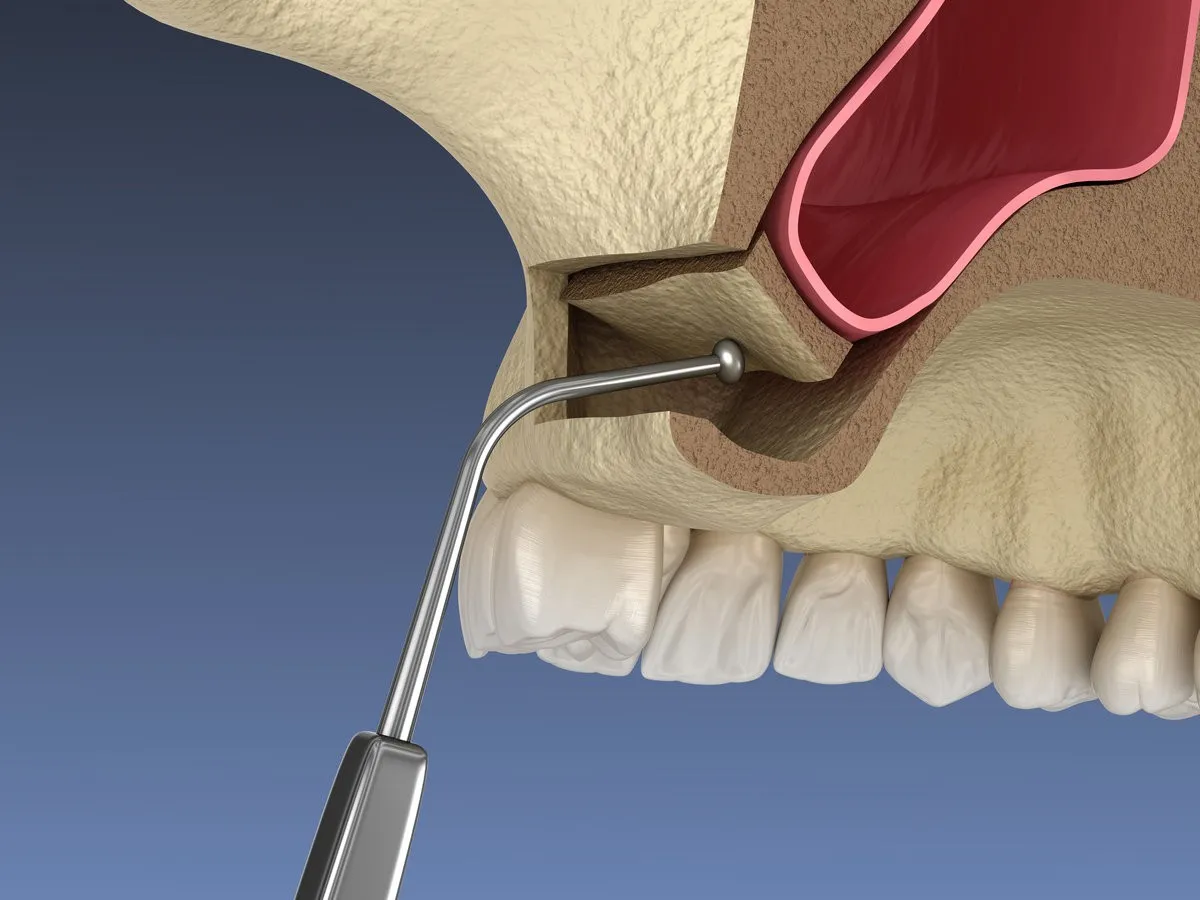
  • Sinus lifts: add bone beneath the sinus floor in the upper jaw for patients who need additional height to support implants in the back teeth.


Each of these procedures serves a different purpose, and our doctors determine which one applies after reviewing imaging of your bone structure and gum health. Patients interested in the sinus lift procedure specifically can find more detail on how it differs from a standard graft.

Bone Graft Healing Time and Recovery

Healing time after bone grafting varies based on how much bone needs to be rebuilt and where the graft was placed. Many patients wait several months for the graft to fully integrate before implant placement moves forward, though some straightforward cases allow for implant placement sooner. Mild swelling or tenderness near the graft site is common in the days immediately following the procedure, and our team schedules follow-up visits to confirm the area is healing as expected before any next steps are planned.

Patients who have been told elsewhere that their bone loss is too advanced for grafting may want to consider a second opinion, as advanced techniques often make a difference in cases that initially seem limited. For patients working toward a larger restoration, such as full mouth reconstruction or a full-arch implant solution, bone grafting is frequently one of the earliest steps in a longer treatment plan.

Rebuilding Bone and Restoring Smiles at Colonia Dental Associates

The words “bone loss” can feel discouraging to hear at first, but they rarely mean dental implants are out of reach. At Colonia Dental Associates, Dr. Singh and Dr. Apratim, both Associate Fellows of the American Academy of Implant Dentistry, perform bone grafting and implant treatment under one roof, giving patients a coordinated path toward rebuilding the foundation for a healthy, lasting smile.

We work with many dental insurance plans and are proud to be in-network with Cigna PPO and Horizon Traditional plans, helping even more patients maximize their benefits. Our team files insurance claims on your behalf, whether you’re in-network or out-of-network, and financing through CareCredit and Cherry is available for patients who prefer a monthly payment structure. If you have been told implants are not an option because of bone loss, contact our office to schedule a consultation and find out what a bone graft could make possible.

Dental Bridges vs. Implants: How to Know Which One You Actually Need

Losing a tooth can shift the way you chew, alter your speech, and even affect the health of the teeth around the gap. Many patients facing this decision are told they have two main paths forward, a bridge or an implant, and left unsure which one actually fits their situation.

At Colonia Dental Associates, we walk patients through both dental bridges and implant options before recommending a path, because the right answer depends on bone health, budget, and how many teeth need replacing. We break down how each option works so you can have a more informed conversation at your next visit.

Understanding How Dental Bridges Work

A bridge replaces one or more missing teeth by anchoring a false tooth, called a pontic, to the natural teeth or dental crowns on either side of the gap. Because it relies on existing teeth for support, treatment typically moves faster than implant placement and does not require surgery.

The tradeoff is that a bridge does not replace the tooth root, so the jawbone underneath the gap can continue to lose density over time. Bridges also place extra pressure on the neighboring teeth, which can shorten their lifespan if they were already compromised, and the crowns supporting the bridge require the same care as natural teeth to avoid decay underneath.

For patients with strong, healthy teeth on either side of a gap, a bridge can still be a practical solution, particularly when a fast turnaround matters or when implant surgery is not medically advisable. We walk through these factors during an exam so the decision reflects your actual mouth, not just a general rule of thumb.

How Dental Implants Restore Your Smile

An implant replaces the tooth root itself with a titanium post placed directly into the jawbone, topped with a custom crown once the area heals. Because the post stimulates the bone the way a natural root does, implants help preserve jaw structure and do not rely on adjacent teeth for support.

Healing time varies from patient to patient, but most people can expect a period of several months between placement and the final crown, since the post needs to fuse securely with the surrounding bone before it can bear normal biting force. That waiting period is often the biggest factor in whether a patient chooses an implant over a bridge.

When All-on-X May Be the Better Fit

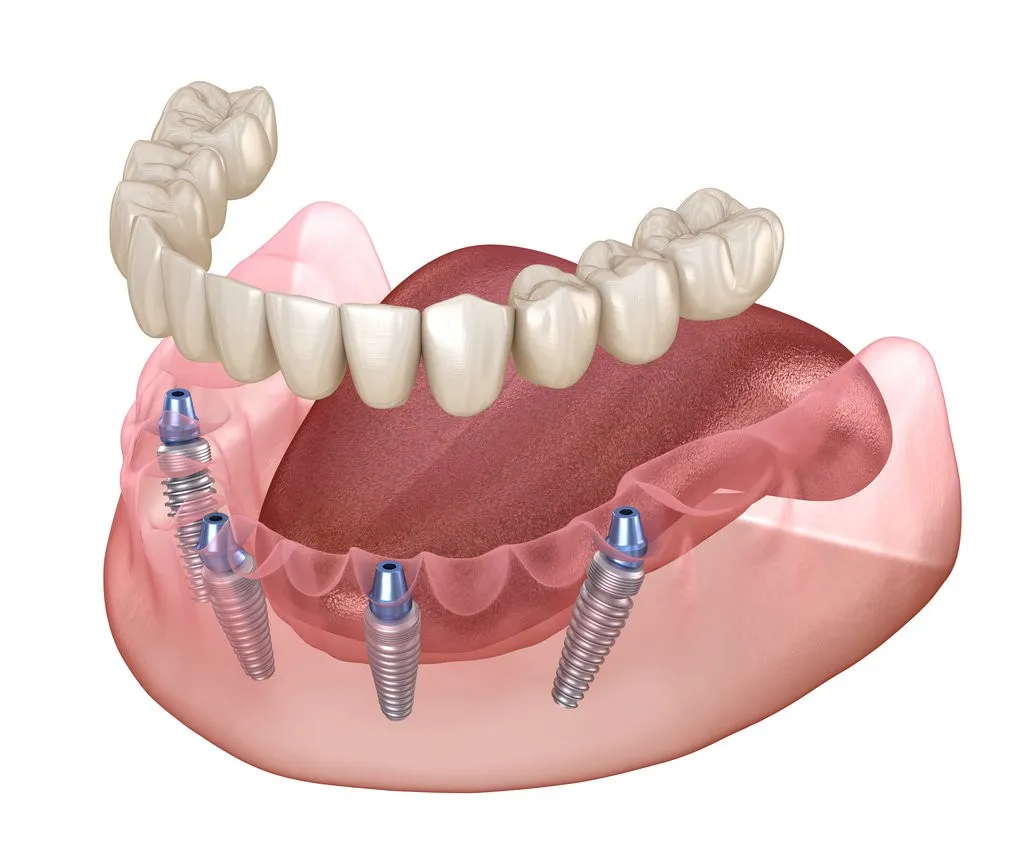
Patients missing several teeth in a row, or an entire arch, are not limited to single-tooth implants. Our All-on-X dental implants option uses a small number of strategically placed implants to support a full set of replacement teeth, which can be a more efficient path than restoring each gap individually.

Comparing Cost, Recovery, and Longevity

Cost and timeline are often the first questions patients ask, and both options come with different considerations worth weighing before treatment begins.

  • Bridges are generally less expensive upfront and can often be completed in a few visits.
  • Implants require a healing period after placement, but many patients find the investment pays off over time.
  • A 2023 study comparing tooth-supported bridges to implant-supported restorations found meaningful differences in long-term outcomes between the two.


Patients who are not ready for implant surgery, or who prefer a shorter treatment timeline, sometimes choose implant-supported dentures as a middle path that still anchors replacement teeth more securely than a removable option alone.

Which Option Is Right for You?

There is no single answer that works for every patient. Bone density, gum health, the number of teeth involved, and personal preference all play a role in which treatment makes the most sense. Our doctors evaluate each of these factors during a consultation, using imaging and a full oral exam to help map out a plan tailored to your mouth rather than a generic recommendation.

Some patients also find their decision shifts once they understand the long-term maintenance involved. A bridge may need replacement within a decade or so, while a well-placed implant is designed to function for many years with routine care, similar to a natural tooth.

Schedule a Consultation with Colonia Dental Associates

Deciding between a bridge and an implant is easier with a clear picture of your oral health and goals. Our team takes the time to explain what each option involves, including recovery, cost, and expected results, so you can move forward with confidence instead of guesswork.

If you are missing a tooth or considering replacing an aging restoration, we would be glad to help you weigh your options. Reach out to us today to schedule a visit.

Sinus Lifts and Bone Grafting: Advanced Implant Solutions for Complex Cases

Being told you don’t have enough bone for dental implants can feel like a dead end. For many patients in the Woodbridge area, years of tooth loss, bone resorption, or changes in the upper jaw have left insufficient bone volume to support implant placement — and that news can be discouraging. The good news is that modern dentistry has advanced well beyond that limitation, and procedures like sinus lifts and bone grafting have made implants a viable, long-term solution for patients who once had no options.

At Colonia Dental Associates, we perform these advanced procedures as part of a comprehensive approach to implant care. Dr. Ashlee N. Apratim and Dr. Gurjinder Singh are both Associate Fellows of the American Academy of Implant Dentistry who have completed the prestigious Rutgers University AAID MaxiCourse — hundreds of hours of post-graduate training in implant dentistry and prosthetics. For patients throughout Colonia and Woodbridge considering dental implants, our team has the expertise to handle even the most complex bone-deficiency cases with precision and care.

Why Bone Volume Matters for Implant Success

A dental implant functions like a titanium root, anchoring directly into the jawbone and fusing with it through a process called osseointegration. For this to work, there must be adequate bone height, width, and density at the implant site. When a tooth is lost, the surrounding bone begins to resorb, or shrink, over time. In the upper jaw, this process is compounded by the proximity of the maxillary sinuses — the hollow spaces above the back teeth — which expand downward as bone recedes, leaving very little room for implant placement.

Without sufficient bone, implants cannot achieve the stability needed to support a crown, bridge, or full-arch restoration. This is why bone-building procedures are a critical first step for many patients. A 15-year retrospective study published by the National Institutes of Health tracked 757 implants placed on grafted maxillary bone and found that sinus augmentation paired with bone grafting produced consistent, long-term implant success across multiple graft material types, validating these procedures as a reliable pathway to implant placement even in challenging cases.

What Is a Sinus Lift?

Understanding the Procedure

A sinus lift, also called sinus augmentation, is a surgical procedure that creates additional bone height in the upper jaw by gently lifting the floor of the maxillary sinus and placing bone graft material in the newly created space. As the graft heals over several months, it integrates with the natural bone, producing a stable, dense foundation for implant placement. The procedure is typically performed when the residual bone height in the posterior upper jaw is insufficient for safe implant placement without encroaching on the sinus cavity.

When Is a Sinus Lift Necessary?

Patients who have experienced tooth loss in the upper back region of the mouth — particularly the premolars and molars — are the most common candidates for this procedure. The longer teeth have been missing, the more bone resorption has typically occurred. Patients who have worn dentures for an extended period, those with a naturally large sinus cavity, or those who lost teeth as a result of gum disease are also frequently in need of sinus augmentation before implants can be placed. Our oral surgery team evaluates each patient with advanced digital imaging to assess bone volume and determine the most appropriate surgical approach.

Transform Your Smile Today

Book NowCall Now

What Is Bone Grafting?

Bone grafting is a broader term for any procedure that adds bone or bone-stimulating material to a deficient area of the jaw. While sinus lifts specifically address vertical bone loss in the upper posterior jaw, bone grafting can be performed throughout the mouth — including in the lower jaw, at extraction sites, or along the ridge where a tooth once sat. The graft material serves as a scaffold that encourages the body to generate new, natural bone in areas where it has been lost.

Several types of graft material may be used depending on the case, including bone sourced from the patient’s own body, processed donor bone, or advanced synthetic materials that closely mimic natural bone structure. At Colonia Dental Associates, our selection of graft materials reflects our commitment to modern dental materials and quality, ensuring that each patient receives the most effective option for their specific anatomy and clinical needs.

The Path From Grafting to Final Restoration

For most patients, bone grafting or sinus augmentation is the first phase of a multi-stage implant treatment plan. After the graft is placed, a healing period of several months is required to allow the new bone to mature and consolidate. Once adequate bone volume is confirmed through follow-up imaging, implants are placed and allowed to integrate with the bone before the final restoration is attached. This staged approach, while requiring patience, produces the most stable and durable implant outcomes possible. The final result — a natural-feeling implant topped with a precisely crafted dental crown — is designed to function and look indistinguishable from a natural tooth.

Trust Complex Cases to an Experienced Team

Not every dental practice has the training or equipment to perform sinus lifts and bone grafting in-house. These procedures require an experienced dentist with a background in complex dental work, advanced surgical techniques, and a thorough understanding of implant biomechanics. Patients who attempt to pursue implants without addressing underlying bone deficiencies risk implant failure, prolonged complications, and the need for more extensive corrective treatment down the road.

Begin Your Implant Journey With Colonia Dental Associates

Dr. Apratim and Dr. Singh have dedicated significant post-graduate training specifically to implant dentistry and prosthetics, giving patients throughout the Woodbridge area access to a level of surgical and restorative expertise that produces consistently exceptional outcomes. From the initial evaluation through final restoration, every phase of your treatment is guided by a team that takes the time to understand your goals, explain your options, and build a plan that’s right for you. If you’ve been told in the past that you’re not a candidate for implants, we encourage you to come in for a second opinion. Contact our office today to schedule your consultation with Colonia Dental Associates.

Signs Your Overseas Dental Implant Work Needs Re-Evaluating

Dental tourism has become increasingly popular as patients seek more affordable implant solutions in countries like Mexico, Colombia, Costa Rica, and others offering significantly lower prices than US-based treatment. While many international dental clinics employ skilled practitioners and modern techniques, the reality is that not all overseas dental work meets the same standards you’d expect from American practices. The appeal of saving thousands of dollars can quickly fade when complications arise, and you realize you’re thousands of miles from the dentist who performed your procedure. If you’ve recently had implant work done abroad, certain warning signs may indicate your treatment needs professional evaluation.

At Colonia Dental Associates, we’ve completed extensive training in evaluating and correcting problematic implant cases. Dr. Singh and our team see more patients returning from overseas dental experiences than you might imagine, many facing complications ranging from minor discomfort to serious infections requiring extensive corrective treatment. We provide comprehensive second opinions and restoration services for patients throughout Woodbridge, Colonia, and surrounding New Jersey communities.

Pain, Swelling, or Persistent Discomfort

Some discomfort is normal immediately following implant placement, but pain should steadily decrease within the first week or two as healing progresses. If you’re experiencing persistent pain weeks or months after your overseas procedure, something may be wrong. The pain might feel sharp and localized around the implant site, or it could be a dull ache affecting your entire jaw. Swelling should also resolve within the first few days, with any lingering puffiness disappearing by two weeks post-surgery.

Chronic inflammation around your implant suggests possible infection, improper placement, or tissue rejection. The implant may have been positioned at the wrong angle or depth, placing excessive pressure on surrounding structures. Material quality can also contribute to complications, as some international clinics use implant systems not approved by the FDA or manufactured to different standards than US-approved products. Research shows dental implants have a success rate of 95% when properly placed and maintained, so persistent symptoms warrant immediate evaluation by a qualified implant dentist familiar with correcting overseas work.

Mobility or Looseness in Your Implants

Dental implants should feel completely stable and solid, just like your natural teeth. During the first few months after placement, the implant integrates with your jawbone through osseointegration. Once healed, a properly placed implant shouldn’t move at all when you bite, chew, or apply gentle pressure with your finger. If you notice any wiggling, shifting, or looseness in your implant or the crown attached to it, this signals a serious problem requiring immediate attention.

Several factors can cause implant mobility. The implant may have failed to integrate properly with your bone due to insufficient bone density, infection at the surgical site, or poor surgical technique. Some overseas clinics may rush through the healing phase, placing the final restoration before osseointegration is complete. Material quality also plays a role, as lower-grade implants may not bond with bone as effectively as premium systems used in US practices. In some cases, the crown or abutment connecting the implant to your restoration may have loosened rather than the implant itself, which is easier to correct but still requires professional intervention.

Transform Your Smile Today

Book NowCall Now

Changes in Your Bite or Jaw Alignment

Your bite should feel natural and comfortable after implant treatment. If you notice your teeth no longer come together properly, you’re experiencing jaw pain when chewing, or you find yourself subconsciously adjusting how you bite, your implant restoration may be improperly positioned or designed. Bite problems can develop gradually as you compensate for ill-fitting dental work, or they may be obvious immediately after receiving your final restoration. You might notice you can’t chew effectively on one side of your mouth, or certain foods have become difficult or uncomfortable to eat.

Improper bite alignment doesn’t just affect comfort, it can lead to serious long-term complications. Excessive force on poorly positioned implants can cause the implant to fail, damage surrounding teeth, or create painful temporomandibular joint problems. Some overseas clinics may not invest adequate time in precisely calibrating your bite or may use less sophisticated technology for planning implant placement. We frequently see cases where implants were placed at incorrect angles or positions, making it impossible to create properly functioning restorations. Correcting these issues often requires careful adjustment or, in severe cases, replacing the restoration entirely with proper planning and execution.

Visible Signs of Infection or Gum Problems

Your gum tissue around dental implants should look pink, firm, and healthy. Warning signs of infection include redness, tenderness, or gum tissue that appears shiny or swollen. You may notice pus or discharge around the implant site, particularly when you apply gentle pressure to the area. Bad breath or a persistent unpleasant taste in your mouth despite good oral hygiene can also indicate infection. Some patients develop what’s called peri-implantitis, an inflammatory condition similar to gum disease affecting the tissues and bone around implants.

Infection risk increases when surgical sites aren’t properly sterilized, when post-operative care instructions are inadequate, or when follow-up appointments are impossible due to distance. The longer you’ve been away from the treating dentist, the harder it becomes to address developing problems. What starts as minor inflammation can progress to serious bone loss around your implant, potentially causing implant failure and requiring bone grafting before replacement. If you’re experiencing any signs of infection, don’t wait to see if it resolves on its own. Infections can spread quickly and cause significant damage to surrounding structures.

Colonia Dental Associates: Second Opinions and Implant Restoration

If you’re experiencing any of these warning signs after overseas dental treatment, a professional evaluation can determine whether your implants can be saved or require replacement. We understand that patients who traveled abroad for dental work often did so for financial reasons, and facing additional costs for corrective treatment can be frustrating. However, addressing problems early typically costs less and produces better outcomes than waiting until complications worsen. We offer flexible financing through Care Credit, Cherry, and Alphion to make necessary corrective treatment accessible.

Dr. Singh has extensive training in implant dentistry, including complex cases requiring bone grafting, sinus lifts, and full arch reconstructions. Our comprehensive evaluation includes 3D imaging to assess bone health, implant positioning, and integration status, allowing us to develop a clear treatment plan for resolving your concerns. We’ve helped numerous patients from throughout the Woodbridge area correct problematic overseas dental work, restoring both function and confidence. Contact our office today to schedule your second opinion consultation and take the first step toward resolving your implant concerns.

All-on-4 Implants: A Complete Guide for Woodbridge Area Patients

Missing multiple teeth or dealing with failing dentures can dramatically impact your quality of life, affecting everything from your ability to enjoy favorite foods to your confidence in social situations. Traditional solutions like removable dentures often slip, cause discomfort, and require messy adhesives, while individual implants for each missing tooth can be costly and time-consuming. The frustration of living with an incomplete smile or unreliable teeth replacement options leaves many people searching for a more permanent, comfortable solution.

Colonia Dental Associates offers a revolutionary solution for patients in the Woodbridge area who want to restore their complete smile efficiently and effectively. Our experienced team provides comprehensive dental implant services, including All-on-4 implant treatment that can replace an entire arch of missing teeth with just four strategically placed implants, giving you a stable, natural-looking smile in a fraction of the time required by traditional methods.

What Are All-on-4 Implants?

All-on-4 implants represent a breakthrough in full-mouth restoration technology. This innovative treatment uses four precisely positioned dental implants to support a complete arch of replacement teeth, eliminating the need for individual implants for each missing tooth. The technique takes advantage of your existing bone structure, with two implants placed vertically in the front of your jaw and two angled implants positioned in the back to maximize stability and support.

This approach differs significantly from traditional implant methods that might require six to eight implants per arch. By using only four implants, the procedure reduces treatment time, healing period, and overall cost while still providing exceptional stability and function. The angled placement of the posterior implants often eliminates the need for bone grafting procedures, making treatment possible for patients who might not have been candidates for traditional implant approaches.

Immediate Function and Comfort

One of the most remarkable aspects of All-on-4 treatment is the ability to provide immediate function. In many cases, patients can receive temporary replacement teeth on the same day as implant placement, allowing them to eat and speak normally while their implants integrate with the surrounding bone tissue. This immediate restoration capability means you won’t have to spend months without teeth or relying on uncomfortable temporary solutions.

Transform Your Smile Today

Book NowCall Now

The All-on-4 Advantage Over Traditional Options

All-on-4 implants offer numerous advantages over traditional dentures and conventional implant approaches. Unlike removable dentures that can slip, cause sore spots, and restrict your diet, All-on-4 restorations are permanently anchored to your jawbone, providing stability comparable to natural teeth. Dental implants have a success rate of 95%, making them one of the most reliable tooth replacement options available.

The treatment also helps preserve your jawbone structure. When teeth are missing, the underlying bone begins to deteriorate due to lack of stimulation. All-on-4 implants provide the necessary stimulation to maintain bone density and facial structure, preventing the sunken appearance often associated with traditional dentures. This preservation of bone structure maintains your natural facial proportions and prevents premature aging.

From a practical standpoint, All-on-4 restorations eliminate many of the daily hassles associated with removable dentures. You’ll clean your new teeth just like natural teeth, without special soaking solutions or adhesives. You can eat your favorite foods without worry, speak clearly without fear of slipping, and smile confidently knowing your teeth are secure.

The Treatment Process: What to Expect

Your All-on-4 journey begins with a comprehensive consultation and evaluation. We use advanced imaging technology to assess your bone structure, oral health, and overall treatment suitability. This planning phase is crucial for ensuring optimal implant placement and long-term success. We’ll discuss your goals, answer questions about the procedure, and create a customized treatment plan tailored to your specific needs.

On the day of surgery, we place the four implants using precise surgical techniques developed specifically for this procedure. The strategic angled placement maximizes contact with available bone while avoiding anatomical structures like sinuses and nerves. Most patients experience minimal discomfort during the procedure thanks to advanced anesthetic techniques and our gentle approach.

Following implant placement, temporary replacement teeth are typically attached the same day, allowing you to leave our office with a functional smile. These temporary teeth will serve you well during the healing period while your implants integrate with your jawbone, a process that typically takes several months. Once integration is complete, we’ll replace the temporary restoration with your final, custom-crafted teeth designed for optimal function and aesthetics.

Your Path to a Complete Smile at Colonia Dental Associates

All-on-4 implants represent a life-changing solution for patients dealing with multiple missing teeth or failing dental work. At Colonia Dental Associates, our commitment to quality and patient-centered care ensures you receive the highest standard of treatment in a comfortable, supportive environment. Our fee-for-service approach allows us to focus entirely on achieving the best possible outcomes for your unique situation, using premium materials and taking the time necessary for exceptional results.

Don’t let missing teeth continue to limit your life and confidence. All-on-4 implants can restore your ability to eat, speak, and smile with complete confidence while providing a long-term solution that looks and feels natural. Contact our experienced team at (732) 381-7171 or schedule your consultation online to discover how All-on-4 implants can transform your smile and your life.

Frequently Asked Questions About All-on-4 Implants

How many implants does All-on-4 treatment actually require?

As the name suggests, just four strategically placed implants support an entire arch of replacement teeth, compared to the six to eight implants traditional methods might require. This reduces treatment time, cost, and the need for additional procedures like bone grafting.

Will I be without teeth during the healing process?

In most cases, no. Temporary replacement teeth are typically attached the same day as implant placement, allowing you to eat and speak normally while your implants integrate with the surrounding bone over the following months.

Am I a candidate for All-on-4 if I’ve been told I don’t have enough bone for implants?

Possibly. The angled placement of the posterior implants in All-on-4 treatment often eliminates the need for bone grafting by making better use of available bone, which can make treatment accessible to patients who weren’t candidates for traditional implant approaches.

How long does it take for All-on-4 implants to fully integrate?

Full integration with the jawbone typically takes several months. During this healing period, you’ll wear a temporary restoration attached the same day as surgery, and once integration is complete, it’s replaced with your final, custom-crafted teeth.

How do I care for All-on-4 implants after treatment?

Caring for All-on-4 restorations is similar to caring for natural teeth: regular brushing and flossing, along with routine dental visits, are the primary requirements. There is no need for special soaking solutions or adhesives that removable dentures typically require.

Full Mouth Reconstruction: What Woodbridge Patients Should Know Before Starting Treatment

Full mouth reconstruction is a coordinated treatment plan that restores or replaces most or all of the teeth in the upper and lower arches, addressing decay, missing teeth, bite problems, and gum disease together rather than one tooth at a time. When years of untreated decay, trauma, tooth loss, or grinding have compromised multiple teeth, individual fillings and single-tooth treatments are no longer enough to restore comfortable chewing, clear speech, and a smile you feel confident showing.

At Colonia Dental Associates, our team in Woodbridge builds full mouth reconstruction plans around each patient’s combination of restorative, periodontal, and oral surgery needs. Because every case is different, we start with a comprehensive evaluation before recommending any part of a full mouth reconstruction plan, and we walk you through the reasoning behind every phase so you know what to expect before treatment begins.

Are You a Candidate for Full Mouth Reconstruction?

Full mouth reconstruction is usually recommended when problems have accumulated across many teeth rather than being isolated to one or two. Common signs that a patient may benefit include multiple missing or severely broken teeth, several failing crowns or fillings, advanced gum disease that has affected the supporting bone, chronic jaw pain or a bite that feels unstable, and years of avoiding dental care while problems compounded. Patients who have had teeth ground down from bruxism, lost significant bone from long-term tooth loss, or experienced trauma affecting several teeth at once are also common candidates.

A thorough evaluation is the only way to know whether a full reconstruction, or a more limited combination of treatments, is the right fit for your mouth. Some patients assume their case is too complex to fix, when in fact a staged plan can address even long-neglected oral health in a predictable, manageable way.

Understanding the Scope of Full Mouth Reconstruction

Full mouth reconstruction goes far beyond routine dental work, involving the systematic restoration or replacement of most or all teeth in both arches. This comprehensive approach addresses not only damaged teeth but also bite alignment, jaw position, gum health, and overall facial aesthetics. Treatment typically combines multiple areas of care, including restorative procedures, periodontal therapy, and sometimes orthodontics or oral surgery.

Unlike individual treatments that address one problem at a time, reconstruction takes a holistic view of your entire oral health system. This means considering how your bite functions, how your teeth look when you smile, and how treatment will affect your ability to speak and eat comfortably. The goal extends beyond fixing what is broken to building function and aesthetics designed to hold up for years to come.

What Happens During Each Phase of Treatment

Full mouth reconstruction typically requires 6 to 18 months to complete, depending on the complexity of your case and the healing time needed between procedures. Most plans move through a similar sequence of phases.

Consultation and Diagnostics

Treatment begins with a full evaluation of your teeth, gums, and bite, supported by x-rays, digital scans, and impressions or photographs. This diagnostic picture allows your dentist to map out which teeth can be saved, which need to be replaced, and how your bite should ultimately align.

Preparatory Care

Before reconstruction can begin, your mouth often needs to be stabilized. This phase may involve treating active gum disease, extracting teeth that cannot be saved, addressing infection, or building up bone through grafting so that implants have a stable foundation.

Restorative and Implant Placement

Once your mouth is healthy, reconstruction moves into the restorative phase, which may include dental implants, crowns, bridges, or other restorations depending on your plan. Dental implants have a success rate of 95%, but they require several months of healing time to integrate properly with the jawbone before permanent restorations are attached.

Final Adjustments

In the final phase, your dentist fine-tunes the fit, function, and appearance of your new teeth, adjusting your bite as needed and reviewing a home care routine that will help your reconstruction last.

Transform Your Smile Today

Book NowCall Now

Managing expectations about treatment duration helps reduce stress and ensures you are prepared for the commitment involved. While the process requires patience, most patients find that the improvement in function and appearance makes the investment of time worthwhile, and temporary solutions help maintain reasonable comfort and aesthetics throughout treatment.

Investment Considerations and Financing

Full mouth reconstruction represents a significant financial investment that reflects the complexity and comprehensive nature of the treatment. Cost varies considerably based on the specific procedures required, the materials used, and the extent of reconstruction needed. Our fee-for-service approach means we can focus on providing quality treatment using durable materials without insurance restrictions that might otherwise compromise outcomes.

Many dental insurance plans provide some coverage for necessary restorative procedures, though coverage varies between policies. We work with patients to understand their benefits and maximize reimbursement where possible, and we encourage you to compare our insurance and financing options before starting treatment. We also offer multiple financing options, including Cherry and Care Credit, to make treatment more manageable through monthly payments.

The long-term value of quality reconstruction often exceeds the initial investment once you factor in the durability of well-chosen materials and techniques. Well-executed reconstruction can last for many years with proper care, while lower-quality alternatives may require frequent repairs or early replacement.

Why a Comprehensive, Experienced Approach Matters

Complex cases benefit from a dentist who has managed comprehensive treatment plans before, since predicting how multiple teeth, the bite, and supporting bone will respond to treatment takes judgment that develops over years of practice. This is one reason choosing an experienced dentist for complex dental work matters as much as choosing the right materials.

We also see patients who started treatment elsewhere, including implant work completed abroad, and later needed their case re-evaluated once complications appeared. If you are unsure whether previous treatment is holding up the way it should, reviewing the signs that overseas dental implant work needs re-evaluating can help you decide whether a second opinion is worth pursuing before problems become more difficult to correct.

Transform Your Smile at Colonia Dental Associates

Full mouth reconstruction represents a significant investment in your health, confidence, and quality of life. At Colonia Dental Associates, we combine thorough diagnostics with personalized planning to create comprehensive solutions built around your specific needs. Our fee-for-service practice allows us to focus on achieving strong outcomes using quality materials and taking the time each case requires, and you can meet our dental team before committing to a plan.

Do not let extensive dental problems continue to limit your life and confidence. Full mouth reconstruction can help restore your ability to eat comfortably, speak clearly, and smile with confidence. Schedule your comprehensive consultation to discuss how full mouth reconstruction could fit your oral health and your goals.

Frequently Asked Questions About Full Mouth Reconstruction

How is full mouth reconstruction different from a smile makeover?

Full mouth reconstruction is primarily a functional treatment addressing decay, missing teeth, gum disease, and bite problems, while a smile makeover focuses mainly on appearance. Many reconstruction plans improve appearance as a byproduct, but the starting point is restoring health and function first.

Will I be without teeth during treatment?

No. Temporary restorations are used throughout treatment so you maintain reasonable function and appearance while permanent restorations are being planned, fabricated, or allowed to heal into place.

How many appointments does full mouth reconstruction require?

The number of appointments depends on your specific plan, but most patients attend several visits spaced across each phase, from initial diagnostics through preparatory care, implant placement, healing checks, and final restorations. Your dentist will map out a visit schedule during your consultation.

Does dental insurance cover full mouth reconstruction?

Coverage varies by plan and by procedure. Some restorative and periodontal components may be partially covered, while cosmetic elements typically are not. Our team reviews your benefits and available financing so you understand costs before treatment begins.

What happens if I ignore the need for full mouth reconstruction?

Delaying treatment typically allows decay, gum disease, and bone loss to progress, which can make future treatment more complex and may reduce the number of options available. Addressing multiple problems together, before they worsen, generally leads to a more predictable outcome.

Click to listen highlighted text!