Porcelain Veneers vs. Composite Bonding Your Smile Actually Needs

A chipped edge, a stubborn gap, or teeth that never quite look as bright as you would like can make you hesitate before smiling in photos. Two of the most common fixes, porcelain veneers and composite bonding, both promise a better-looking smile, but they work in very different ways and fit very different situations.

Colonia Dental Associates helps patients throughout Woodbridge Township and the surrounding communities compare these two options as part of a broader menu of cosmetic dentistry treatments, so you can choose the one that matches your goals, timeline, and budget.

What Are Porcelain Veneers?

Porcelain veneers are thin, custom-crafted shells of dental ceramic bonded to the front of your teeth to correct chips, stains, gaps, and uneven edges. A small amount of enamel is removed to fit each veneer, so the change is considered permanent, and each shell is built to mimic the way natural enamel reflects light.

At Colonia Dental Associates, Dr. Ashlee N. Apratim and Dr. Gurjinder Singh have both completed the Aesthetic Advantage Dentistry course for dental veneers, a widely respected cosmetic training program. Our fee-for-service model also allows us to select premium porcelain and partner with dental labs known for consistent, natural-looking results rather than materials chosen around insurance reimbursement limits. With proper care, porcelain veneers typically last 10 to 15 years, and a systematic review of clinical studies published through the National Library of Medicine points to strong long-term survival rates for the treatment, making veneers a solid fit for patients who want a low-maintenance result.

What is Composite Bonding?

Composite bonding uses a tooth-colored resin that a dentist applies directly to the tooth, then shapes, hardens with a curing light, and polishes to blend with the rest of your smile. The process usually takes 30 to 60 minutes per tooth, requires little to no enamel removal, and rarely calls for anesthesia.

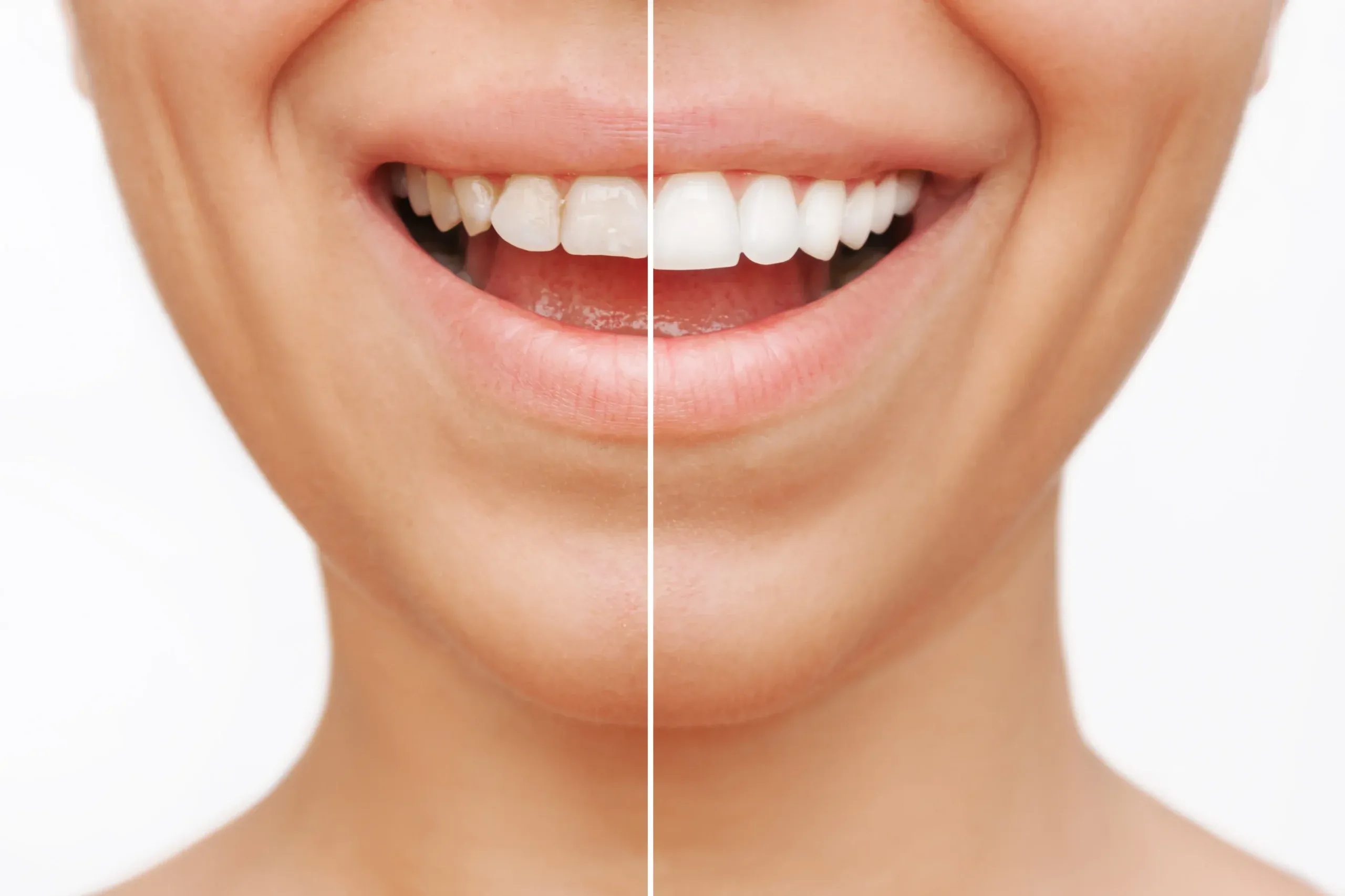
Bonding works well for smaller cosmetic concerns, such as closing gaps a few millimeters wide or repairing a single chipped tooth, and it can often be completed at Colonia Dental Associates through dental bonding in a single visit, without the two-appointment process veneers usually require.

How Much Do Veneers and Bonding Cost

Several practical factors typically separate the two treatments, and reviewing them side by side can make the decision easier:

  • Cost: Composite bonding generally costs less per tooth than porcelain veneers, given the smaller volume of material and shorter appointment time involved.
  • Timeline: Bonding can often be finished in a single visit, while veneers usually require two appointments for preparation and placement.
  • Longevity: Porcelain veneers can last 10 to 15 years with proper care, while bonding typically holds up for 3 to 10 years before needing touch ups.
  • Enamel removal: Veneers require some permanent enamel reduction, while bonding is minimally invasive and does not permanently alter the tooth in most cases.

Weighing these differences against your budget, timeline, and how significant your cosmetic goals are can help point you toward the right fit.

How to Know Which Option Fits Your Smile

The right choice usually comes down to how much of your smile you want to change and how long you want the results to hold up. If you are correcting minor chips, small gaps, or slight discoloration on a tooth or two, bonding may be able to address the concern quickly and affordably. If you want a more uniform transformation across several teeth, or if you are also considering a full smile makeover, porcelain veneers may be the better long-term investment. Some patients also start with bonding to address a single tooth and later choose veneers for a broader transformation, so the two treatments are not always an either-or decision.

A consultation remains the most reliable way to find out which treatment fits your smile, because your dentist can examine your teeth, discuss your goals, and recommend a plan based on what holds up best over time for your specific bite and habits.

Contact Colonia Dental Associates to Compare Your Options

Our team at Colonia Dental Associates can help you compare composite bonding and porcelain veneers based on your goals, lifestyle, and budget. We work with many dental insurance plans and are proud to be in-network with Cigna PPO and Horizon Traditional plans, and we also offer flexible financing through CareCredit for patients who prefer a monthly payment structure.

Patients throughout Colonia, Woodbridge Township, and the surrounding communities trust us for cosmetic dentistry that looks natural and stands the test of time, from repairing a single chipped tooth with composite bonding to completely transforming a smile with custom porcelain veneers. If you’re ready to find out which option is right for you, contact us to schedule your consultation today.

What to Expect at a Smile Makeover Consultation

Deciding to change your smile is a big step, and it is normal to feel a mix of excitement and uncertainty before that first appointment. You may be wondering what questions you will be asked, what tools your dentist will use, or how long the whole process will take from start to finish. A little preparation can go a long way toward easing those nerves.

At Colonia Dental Associates, we walk every patient through a thorough, unhurried consultation before recommending any treatment. Whether you are considering a few small changes or a full transformation, understanding what happens during this first visit helps you feel confident about the path ahead.

Sharing Your Goals and Concerns

Your consultation begins with a conversation, not a procedure. We want to understand what bothers you about your current smile and what you hope to change. Some patients want to address discoloration or chips, while others are looking at a more comprehensive smile makeover that combines multiple treatments.

We often ask patients to bring photos of smiles they admire, since this helps guide the design process. Your dentist will explain how your facial features, lip line, and bite all play a role in the final result, so the plan reflects what actually suits you rather than a generic template.

A Thorough Oral Health Exam

Before discussing cosmetic options, we perform a complete oral exam to check for cavities, gum disease, worn enamel, or signs of grinding. Any underlying health issues need attention first, since a smile makeover works best when it is built on a healthy foundation. This may include digital X-rays or intraoral scans to give a clear picture of what is happening beneath the surface.

Patient satisfaction with esthetic dental treatment tends to be high when this groundwork is addressed early, and a recent study on immediate patient satisfaction with dental esthetics found a satisfaction rate of 93 percent among patients who underwent prosthodontic treatment for dental discoloration. Addressing the health of your teeth and gums before cosmetic work supports results that hold up over time.

Reviewing Your Treatment Options

Once we understand your goals and have a full picture of your oral health, we discuss which treatments make sense for you. This might include options like porcelain veneers, Invisalign, professional whitening, or a more involved full-mouth reconstruction if multiple concerns need to be addressed. For patients with more significant tooth loss or structural issues, we may also talk through dental implants as part of the plan.

Dr. Ashlee N. Apratim, D.M.D., and Dr. Gurjinder Singh bring extensive training in cosmetic and restorative dentistry to these conversations, including advanced coursework in veneer technique, shade selection, and smile design. This background allows them to walk you through realistic expectations for each option, including timelines, costs, and how different procedures might be combined for the best outcome.

Building a Timeline That Works for You

Every patient’s schedule and priorities are different, and we take that into account when mapping out next steps. Some smile makeovers can be completed in a matter of weeks, while more comprehensive plans involving implants or orthodontic movement may take several months. We talk through pacing options during your consultation so there are no surprises once treatment begins:

  • Straightforward whitening or bonding cases often move quickly, sometimes in a single visit
  • Veneer cases typically involve a preparation appointment followed by a fitting once your custom restorations are ready
  • Full mouth reconstruction or implant-based plans are staged over multiple visits to allow proper healing between steps

Understanding this timeline upfront helps you plan around work commitments, travel, or other events you want your new smile ready for.

Leaving With a Clear Plan at Colonia Dental Associates

By the end of your consultation, you should have a clear sense of what treatment involves, how long it will take, and what kind of results to expect. We encourage questions throughout the process, since a smile makeover is a significant decision and you deserve to feel informed every step of the way.

If you are ready to explore what a smile makeover could look like for you, our team at Colonia Dental Associates is here to help you take that first step with confidence. You can reach out through our contact page to schedule your consultation and start the conversation about the smile you have been wanting.

What Is Dental Bonding and Is It Right for You?

A small chip, a stubborn gap, a tooth that seems slightly off compared to the rest of your smile — these are the kinds of details that stay with you even when no one else notices. The good news is that one of the most effective ways to address these concerns requires no surgery, no lab-fabricated restoration, and often just a single appointment. Dental bonding offers patients a fast, accessible path to a more polished smile, and for many, it is exactly the right solution.

At Colonia Dental Associates, we help patients throughout the Woodbridge, NJ area find the most practical route to the smile they want. Dr. Gurjinder Singh and Dr. Ashlee N. Apratim have each practiced at the practice for nearly a decade and bring a thoughtful approach to every consultation. Both doctors have completed the internationally esteemed Aesthetic Advantage Dentistry course and hold Associate Fellow status with the American Academy of Implant Dentistry. When patients come in curious about improving their smile, we take the time to walk through every option available to them, including our full range of cosmetic dental services, so they leave with a clear picture of what is possible.

How Dental Bonding Works

Dental bonding is a cosmetic procedure in which a tooth-colored composite resin is applied directly to a tooth, sculpted to correct a specific issue, and hardened in place using a curing light. The resin is carefully color-matched to the surrounding teeth so the result looks natural and cohesive. One reason bonding is so widely used is that it typically requires little to no enamel removal, making it one of the most conservative cosmetic options available.

A 2021 clinical study published on PubMed evaluating composite resin restorations for diastema closure and tooth recontouring found an overall survival rate of 90.3% over a four-year period, with a mean survival duration of over 46 months. For cosmetic applications like bonding, this means the material holds up well with proper care. Most bonding appointments are completed in a single visit, and anesthesia is generally only needed if a decayed area is being treated at the same time.

What Conditions Can Bonding Correct?

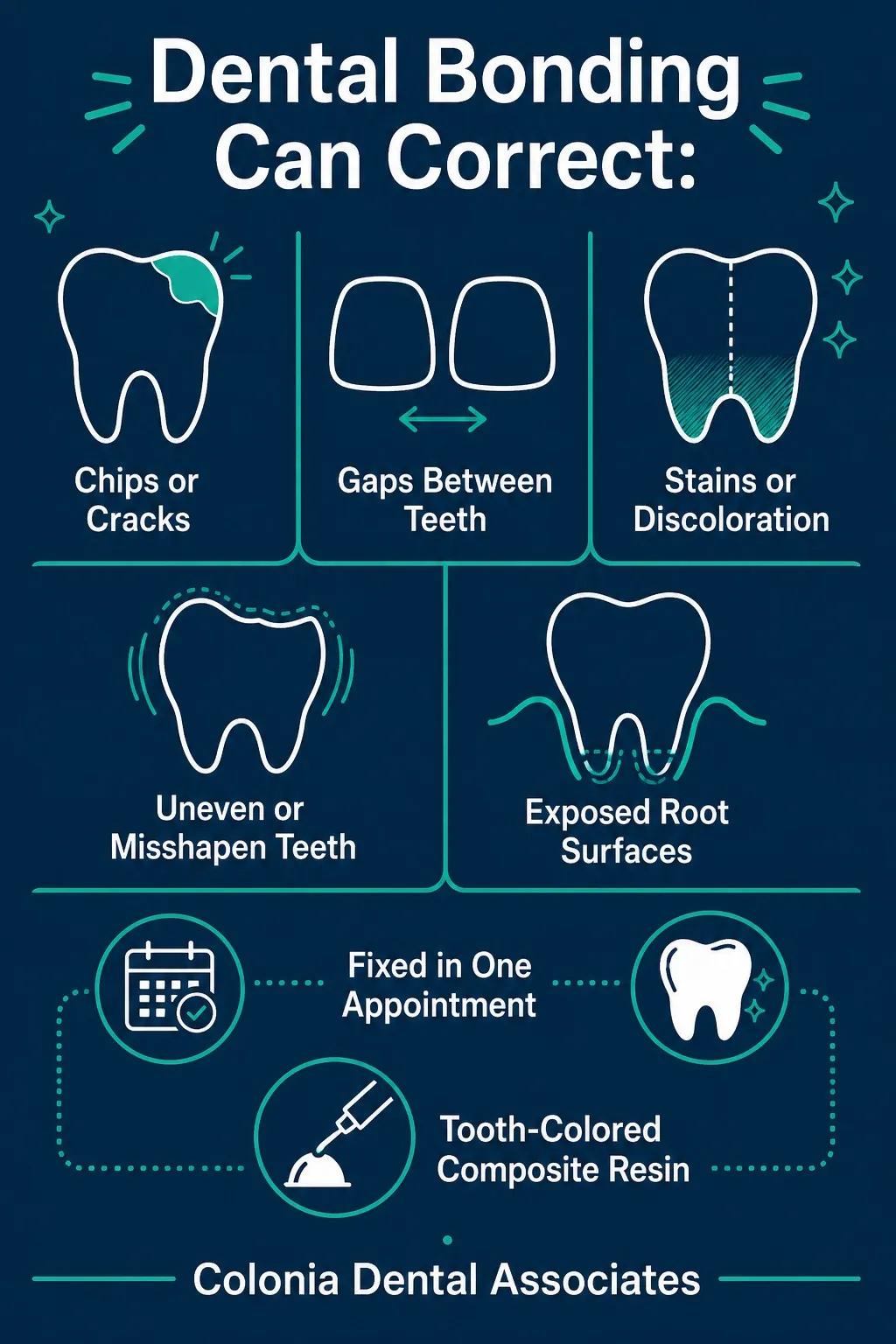
bonding - Colonia Dental Associates

Dental bonding is a versatile treatment, and we use it to address a variety of cosmetic concerns in a single appointment. Here are some of the most common situations where bonding is an appropriate choice:

  • Chipped or cracked teeth: bonding rebuilds the missing portion to restore a smooth, even edge
  • Gaps between teeth: small spaces between front teeth can be closed without orthodontic treatment
  • Discoloration: teeth that have not responded to whitening can be covered with a matched resin layer
  • Misshapen teeth: bonding adds contour to a tooth that appears too small or uneven compared to its neighbors
  • Exposed root surfaces: when gums have receded, bonding helps protect the sensitive area and improve appearance

Each of these situations involves a minor concern that bonding can address efficiently, though we always evaluate the full picture of your oral health before recommending any treatment.

Does Dental Bonding Last?

Bonding typically holds for three to ten years, depending on where it is placed and how well it is cared for. Teeth that experience greater biting force tend to wear down bonding material faster than front teeth treated for cosmetic reasons. Simple habits like avoiding hard candies and ice, and using your teeth to open packaging, can go a long way toward extending the life of your bonding.

Is Dental Bonding the Right Choice for You?

Bonding works best for patients looking to correct minor cosmetic issues without a significant time or financial investment. It is an excellent option when the concern is isolated, such as a single chipped tooth or a small gap, rather than a broader smile concern spanning several teeth. For patients with more significant discoloration, structural damage, or multiple teeth in need of improvement, we may recommend porcelain veneers or tooth-colored fillings as a more comprehensive solution.

Good candidates for bonding have healthy teeth and gums with no active decay or periodontal concerns. We address any underlying issues before proceeding with cosmetic work, ensuring the results have the best possible foundation. Bonding is also a popular starting point for patients who want to see a cosmetic improvement before committing to a more permanent option, since the natural tooth structure remains largely intact throughout the process.

Talk to Our Team at Colonia Dental Associates

If you have been wondering whether dental bonding could improve your smile, the first step is a conversation with our team. At Colonia Dental Associates, we take time to understand what you want from your smile and walk through the full range of Woodbridge cosmetic dentistry options that make sense for your specific situation. There is no pressure and no generic treatment plan — just honest guidance from a team that takes pride in helping each patient reach a result they feel good about.

To find out whether dental bonding is right for you, reach out to our office to schedule a consultation. We look forward to helping you take the next step toward the smile you have been thinking about.

How to Choose a Cosmetic Dentist in New Jersey: Questions to Ask Before Your Consultation

Your smile is one of the first features people notice about you, and deciding to invest in cosmetic dentistry is one of the best ways to achieve the confidence you deserve. However, with so many dental practices offering aesthetic treatments across the Garden State, knowing how to evaluate your options before you even walk into a dental office can make all the difference in your results.

At Colonia Dental Associates, we believe that every patient deserves a cosmetic dentist who combines clinical precision with a genuine understanding of what you want your smile to look like. Drs. Ashlee Apratim and Gurjinder Singh have each been practicing compassionate, patient-centered dentistry for nearly a decade, and both hold Associate Fellow status with the American Academy of Implant Dentistry, having completed hundreds of hours of post-graduate training. Their shared commitment to continuing education ensures that every treatment plan reflects the most current techniques in cosmetic care.

What Credentials and Training Should a Cosmetic Dentist Have?

Cosmetic dentistry is not a formally recognized specialty in the United States, which means any licensed dentist can offer aesthetic treatments. That makes it especially important to look closely at the training a dentist has pursued beyond dental school, rather than their marketing. When evaluating a provider, ask whether they have completed advanced coursework in the specific procedures you are interested in.

Both Dr. Apratim and Dr. Singh have completed the internationally recognized Aesthetic Advantage Dentistry course focused specifically on dental veneers, as well as the prestigious Rutgers University American Academy of Implant Dentistry MaxiCourse. Dr. Apratim and Dr. Singh are also members of the Smile USA Study Club, where they regularly build on the surgical and restorative skill set through lectures and hands-on training. Asking a prospective dentist about their post-graduate education in cosmetic procedures will help you gauge whether their training aligns with the results you are hoping to achieve.

How Can You Evaluate a Dentist’s Cosmetic Results?

Before committing to a consultation, ask to see examples of actual patient outcomes. A reputable cosmetic dentist should be able to provide before-and-after photographs of procedures similar to the one you are considering. This is one of the most direct ways to assess whether a dentist’s aesthetic sensibility matches your own vision for your smile. 

Research published in the National Library of Medicine’s Healthcare journal found that before-and-after photographs were the most compelling form of evidence for patients evaluating cosmetic dental procedures, cited by nearly half of the practitioners surveyed. Browsing a practice’s smile portfolio gives you a realistic preview of the quality and artistry you can expect.

Our smile gallery showcases real results achieved for real patients, reflecting the range of cosmetic treatments we provide at each of our New Jersey locations.

What Questions Should You Ask During the Consultation?

Choosing the right cosmetic dentist often comes down to what happens during that first conversation. The questions you ask before committing to treatment can reveal just as much about a practice as its credentials or before-and-after photos. 

Ask About the Treatment Planning Process

A well-designed cosmetic treatment begins with a thorough examination and a detailed conversation about your goals. Ask your prospective dentist how they determine which procedures are right for your specific case, and whether they use digital imaging or mock-up tools to preview potential outcomes. A dentist who takes the time to understand your expectations before recommending treatment is one who prioritizes your satisfaction over a quick sale.

Ask About Their Range of Cosmetic Services

The most qualified cosmetic dentists offer a comprehensive menu of procedures, allowing treatment to be tailored to your needs rather than limited by what the practice provides. Before your consultation, consider asking about the following services to confirm the practice is equipped to address your goals:

  • Porcelain veneers: Veneers are thin, custom-crafted shells that can reshape, resize, or recolor teeth for a dramatic smile transformation.
  • Teeth whitening: Professional-grade bleaching delivers faster and more lasting results than over-the-counter products.
  • Invisalign: Clear aligner therapy straightens teeth without traditional metal brackets.
  • Dental bonding: This is a conservative, cost-effective option for correcting chips, gaps, or minor discoloration.
  • Full mouth reconstruction: For patients seeking extensive restorative and cosmetic improvements, this comprehensive approach may be the answer. 

Understanding the full scope of what a practice offers ensures you will not need to seek a second provider if your treatment evolves over time.

Ask How the Practice Handles Your Comfort and Communication

Cosmetic treatment is a collaborative process, and it is wise to ask how the dental team communicates treatment timelines, what to expect during recovery, and how they address concerns after a procedure is completed. A practice that is transparent and responsive from your very first interaction is one that takes the doctor-patient relationship seriously.

Choose Colonia Dental Associates for Your Cosmetic Smile Transformation

When you are ready to move forward with cosmetic dental care in New Jersey, experience and artistry both matter equally. Our doctors at Colonia Dental Associates bring nearly a decade of hands-on expertise to every smile makeover, backed by advanced training in veneers, implants, Invisalign, and more. Both Dr. Apratim and Dr. Singh are certified Silver Tier Invisalign providers and hold honors and distinctions from their doctoral training, giving our patients confidence that they are working with providers who have earned their credentials at every level.

We welcome you to ask us every question on this list and any others you may have. Our team is here to make the process of choosing a cosmetic dentist feel simple, transparent, and exciting. Contact our office to schedule your consultation and take the first step toward the smile you have always wanted.

Invisalign for Professionals: Straightening Your Smile Without Disrupting Your Career

Your smile says everything before you ever say a word. For busy professionals, making the right first impression is even more essential. Misaligned teeth aren’t just a cosmetic concern. They also impact confidence and the way you carry yourself in every business interaction. Fortunately, straightening your teeth no longer has to mean a mouth full of metal brackets, missed meetings, or awkward explanations at the conference table.

At Colonia Dental Associates, we understand that our patients lead full, demanding lives. That’s why we’re proud to offer Invisalign as part of our cosmetic dentistry services. This virtually invisible treatment fits around your schedule, not the other way around. As certified Silver Tier Invisalign providers, Drs. Apratim and Singh bring both the technical expertise and the personalized care that working professionals deserve to align their smiles with their career goals.

Why Professionals Choose Invisalign

For anyone spending time in client meetings, courtrooms, classrooms, or boardrooms, the appearance of traditional braces can feel out of place. Invisalign solves that problem with a system of clear, custom-made aligners that gradually shift your teeth into position. They’re nearly undetectable, meaning your colleagues and clients are far more likely to notice your confidence than your treatment.

Invisalign works by progressing through a series of precisely designed trays, each slightly adjusting your tooth alignment. Since the aligners are removable, you can take them out for presentations, important dinners, or professional photos, then simply put them back in. There’s no fumbling with wires or making emergency calls to the dentist over a broken bracket.

Minimal Disruption to Your Daily Routine

One of the biggest concerns professionals bring to us is time. Between work travel, long hours, and packed calendars, frequent dental appointments can feel like an additional burden. Invisalign requires fewer office visits than traditional braces, which means you spend less time in the chair and more time doing what matters. Check-ins are typically spaced out to monitor your progress and transition you to the next set of trays at a comfortable pace.

The aligners themselves require minimal maintenance. You remove them to eat and drink, brush them clean, and wear them for the recommended number of hours each day. A systematic review published in PMC found that patient compliance is one of the primary factors influencing Invisalign treatment success, and the good news is that most professionals find the aligner routine easy to build into their existing habits.

What Invisalign Can Treat

Invisalign is effective for a wide range of orthodontic concerns that professionals commonly face. Here are some of the most common issues it can address:

  • Crowding: Overlapping or crooked teeth make cleaning difficult and affect overall smile aesthetics.
  • Spacing: Gaps between teeth draw unwanted attention and may affect how you speak.
  • Mild to moderate bite issues: Overbites, underbites, and crossbites can impact comfort and function.
  • Relapse cases: Teeth tend to shift back after previous orthodontic treatment when a retainer isn’t worn regularly.

Every case is different, and the best way to determine whether Invisalign is the right fit is through a personal consultation with one of our doctors.

The Importance of Working With an Experienced Provider

Not all Invisalign providers are the same. The quality of your treatment plan, the precision of your aligner fit, and the results you achieve depend heavily on the skill and experience of the dentist overseeing your care. Our smile gallery reflects the results of real patients who have trusted us with their smiles, offering a firsthand look at what our level of care can achieve.

Drs. Apratim and Singh have each earned their Silver Tier Invisalign provider status through hands-on experience and a commitment to continuing education. Both doctors have also completed the prestigious Aesthetic Advantage Dentistry course and are Associate Fellows of the American Academy of Implant Dentistry, bringing a comprehensive understanding of smile aesthetics to every case. When you’re trusting someone with your smile and your professional image, that level of training matters.

Start Your Invisalign Journey at Colonia Dental Associates

Choosing Invisalign is a smart investment in both your appearance and your confidence. Whether you’re based in the Edison, Woodbridge, Clark, or Cranford areas, our team of experienced doctors is ready to help you find out if Invisalign is right for you.

Colonia Dental Associates has been serving New Jersey patients for nearly a decade, with a reputation built on compassionate, detail-oriented care. If you’re ready to take the first step toward a straighter, more confident smile, contact our office today to schedule your consultation.

Spring Smile Makeovers: Why March is the Perfect Time to Start Your Veneer Journey

Spring has a way of making you want to refresh everything — your home, your wardrobe, and yes, your smile. If you’ve been living with chipped, stained, discolored, or uneven teeth, the arrival of March is a natural prompt to finally do something about it. Warmer days, social gatherings, and the return of photo-worthy moments mean your smile will be front and center, and there’s no better time to invest in a transformation that will last.

At Colonia Dental Associates in Colonia, NJ, our team has helped countless patients achieve the confident, radiant smiles they’ve always wanted through expertly crafted cosmetic dentistry solutions. Led by Dr. Ashlee N. Apratim and Dr. Gurjinder Singh — both Associate Fellows of the American Academy of Implant Dentistry and graduates of the internationally esteemed Aesthetic Advantage Dentistry course for dental veneers — we bring exceptional skill and artistry to every smile transformation we create.

What Are Dental Veneers?

Dental veneers are ultra-thin, custom-crafted shells bonded to the front surface of your teeth to dramatically improve their color, shape, size, and overall appearance. Made from porcelain or composite materials, veneers are designed to mimic the natural translucency and texture of enamel, creating results that look and feel completely lifelike. They are one of the most popular and effective cosmetic treatments available today, addressing a wide range of aesthetic concerns in as few as two to three appointments.

Research published by the National Institutes of Health confirms that dental veneers carry a high survival rate of over 90% for more than 10 years, making them a reliable, long-term investment in your smile. The key to achieving those results lies in working with a highly trained provider who understands both the science and artistry behind veneer placement — exactly the kind of care we deliver at Colonia Dental Associates.

Why Spring Is the Ideal Time to Begin

The Timing Works in Your Favor

Spring is one of the most strategic times of year to begin your veneer journey, and it’s not just about aesthetics. The veneer process typically requires two to three appointments over the course of several weeks. By starting in March, you’ll be fully finished and ready to show off your new smile well before summer events, graduations, weddings, and vacation photos arrive. Planning ahead means you can enjoy every moment of the warmer months with complete confidence.

Renewed Motivation Meets Real Results

There’s a reason so many people make big decisions in the spring. The change of season naturally sparks a desire to invest in yourself, and cosmetic dental work is no exception. Patients who begin their veneer consultations in the spring often report that the season itself gave them the push they needed to finally follow through. Whether you’ve been thinking about veneers for months or years, March is the moment to turn that intention into action.

Transform Your Smile Today

Book NowCall Now

What the Veneer Process Looks Like

A smile makeover with veneers at our practice begins with a thorough consultation, during which we listen to your goals, evaluate your oral health, and design a personalized treatment plan. From there, your teeth are gently prepared and impressions are taken to create your custom veneers in a dental laboratory. Temporary veneers are placed in the meantime so you’re never without a beautiful smile throughout the process.

Once your permanent veneers are ready, they are bonded with precision and adjusted to ensure a perfect fit, a natural bite, and a result that exceeds your expectations. The materials we use are carefully selected for both their durability and their ability to reflect light naturally, which is a hallmark of our commitment to modern dental materials and quality cosmetic dentistry. From the first appointment to the final polish, our goal is to make you feel as comfortable and informed as possible every step of the way.

Common Concerns Veneers Can Address

Veneers are a remarkably versatile treatment, capable of transforming a wide variety of cosmetic concerns in a single solution. Many patients come to us unsatisfied with the appearance of their teeth for different reasons, and veneers can address multiple issues at once. Some of the most common concerns we treat include:

  • Discoloration: teeth that don’t respond to whitening treatments, including deep intrinsic stains
  • Chips and cracks: minor structural damage that affects the look and symmetry of your smile
  • Gaps: spaces between teeth that make patients feel self-conscious
  • Uneven sizing: teeth that appear too short, too small, or mismatched in proportion
  • Mild misalignment: slight crowding or irregularity that affects your smile’s overall harmony

Each of these issues can dramatically impact how a person feels about their appearance, and addressing them can be genuinely life-changing.

Start Your Veneer Journey With Colonia Dental Associates

If you’ve been considering veneers, there’s truly no better time to take the first step than right now. Dr. Apratim and Dr. Singh have each completed the prestigious Aesthetic Advantage Dentistry course specifically for dental veneers and have spent nearly a decade delivering compassionate, family-style dental care to patients throughout the Colonia area. Their deep expertise and artistry mean that every veneer case is approached with the same meticulous attention to detail that has made Colonia Dental Associates a trusted name in the community.

Spring is here, and your smile deserves to bloom alongside it. Whether you’re seeking subtle refinement or a full cosmetic transformation, we’re ready to help you create the smile you’ve always envisioned. Contact our office today to schedule your veneer consultation and take the first step toward a brighter, more confident you.

Full Mouth Rehabilitation: What Woodbridge Patients Need to Know Before Starting Treatment

Some dental problems go far beyond a single tooth. When years of decay, wear, trauma, or tooth loss have affected your bite, your function, and your confidence all at once, the answer is not a simple filling or a single crown. It is a comprehensive plan built from the ground up to restore your entire mouth. Full mouth rehabilitation is one of the most impactful treatments in modern dentistry, and for patients in the Woodbridge area who have been living with these compounding challenges, understanding what this process involves is the critical first step.

At Colonia Dental Associates, we provide the complex, multi-disciplinary care that full mouth rehabilitation requires. Dr. Ashlee N. Apratim and Dr. Gurjinder Singh are both Associate Fellows of the American Academy of Implant Dentistry and graduates of the Rutgers University AAID MaxiCourse, giving them advanced training in planning and executing cosmetic dentistry and full-scale reconstructive cases. For nearly a decade, our team has helped patients throughout Colonia and Woodbridge rebuild smiles they thought were beyond repair.

What Is Full Mouth Rehabilitation?

Full mouth rehabilitation, sometimes called full mouth reconstruction, is a personalized treatment plan that addresses functional, structural, and aesthetic problems affecting most or all of the teeth. Unlike a standard smile makeover, which focuses primarily on appearance, full mouth reconstruction addresses underlying oral health conditions as the foundation of any aesthetic improvements. The goal is to restore proper bite alignment, eliminate pain or dysfunction, and rebuild a smile that is both functional and built to last.

Research published by the National Institutes of Health highlights that full mouth rehabilitation, when approached with an interdisciplinary framework, produces treatment success rates as high as 92% in prosthodontic cases, underscoring the importance of advanced training and coordinated care. At Colonia Dental Associates, this is the standard we hold ourselves to on every complex case we treat.

92%

treatment success rate reported for interdisciplinary prosthodontic rehabilitation cases (NIH)

~10 yrs

of combined advanced implant and prosthodontic training between Dr. Apratim and Dr. Singh

3–12+ mo.

typical treatment span, depending on case complexity and foundational needs

Who Is a Candidate for Full Mouth Rehabilitation?

Signs You May Need Comprehensive Care

Many patients who need full mouth rehabilitation have been managing a collection of dental problems for years, often without realizing that everything is connected. Tooth loss in one area of the mouth shifts pressure onto surrounding teeth, which can accelerate wear and cracking elsewhere. Untreated decay quietly spreads. Bite misalignment causes jaw tension, headaches, and uneven enamel erosion. By the time patients come to us, multiple issues often require attention simultaneously.

Common Conditions We Address

Full mouth rehabilitation is often the right solution for patients experiencing a combination of the following concerns.

Extensive Tooth Loss or Decay

Multiple missing or decayed teeth affecting how you chew, speak, or bite comfortably.

Severe Enamel Wear

Wear from grinding, clenching, or acid erosion that has flattened or shortened the teeth over time.

Jaw Pain or TMJ Dysfunction

Bite problems that contribute to jaw tension, clicking, or chronic discomfort.

Failing or Outdated Dental Work

Old crowns, bridges, or restorations that no longer fit or function properly.

Structural or Developmental Conditions

Teeth that developed underdeveloped or structurally compromised, requiring coordinated restoration.

These conditions rarely exist in isolation, which is exactly why a comprehensive treatment plan is far more effective than treating each problem one at a time.

Transform Your Smile Today

Book NowCall Now

What to Expect From the Process

PHASE 1

Consultation and Planning

Digital imaging, bite analysis, and a full health history review.

PHASE 2

Foundational Care

Periodontal therapy, extractions, or bone grafting where needed.

PHASE 3

Restorative and Cosmetic Work

Implants, crowns, and other restorations placed on a stable foundation.

PHASE 4

Ongoing Monitoring

Follow-up visits to confirm bite comfort and long-term stability.

The Consultation and Planning Phase

Before any treatment begins, we conduct a thorough evaluation that includes digital imaging, bite analysis, and a detailed conversation about your goals, concerns, and health history. This diagnostic phase is arguably the most important part of the entire process. A well-designed treatment plan ensures that every restoration, from dental implants to dental crowns, works together cohesively rather than in isolation. We also take the time to walk you through the full scope of recommended treatment so you know exactly what to expect, step by step.

Treatment Sequencing and Timeline

Full mouth rehabilitation is typically completed in phases, starting with any necessary foundational work such as periodontal therapy, extractions, or bone grafting before moving into restorative and cosmetic stages. This sequencing ensures that every new restoration is placed on a healthy, stable foundation. Depending on the complexity of your case, the process may span several months to a year or more. While that timeline can feel significant, patients consistently report that the results, a fully functional and aesthetically transformed smile, are worth every step of the journey.

Materials and Restoration Options

A full mouth rehabilitation plan can draw on several restoration types depending on which teeth need attention and how much structure remains. Patients missing multiple teeth may be candidates for implant-supported full-arch restorations, while others may need a mix of crowns, bridges, and veneers. Comparing implant-based options against removable alternatives during the planning phase helps establish realistic expectations for function, maintenance, and longevity before treatment begins.

Why the Provider You Choose Matters

Full mouth rehabilitation is among the most technically demanding procedures in dentistry. It requires a provider with not only advanced clinical training but also a deep understanding of how the teeth, jaw, gums, and bite all interact as a system. Choosing a provider who has specific experience with complex reconstructive cases is essential to achieving a result that functions well and lasts for years to come. Our commitment to complex dental work and the post-graduate education our doctors have completed means patients throughout the Woodbridge area have access to the caliber of reconstructive care typically found only at specialty centers.

Planning for the Investment

Because full mouth rehabilitation combines several procedures into one coordinated plan, cost varies significantly based on which restorations a case requires. We build a detailed, itemized treatment plan before any work begins so there are no surprises, and we walk every patient through insurance and financing options that can make comprehensive care more manageable.

Choose Colonia Dental Associates for Your Full Mouth Rehabilitation

Dr. Apratim and Dr. Singh bring nearly a decade of dedicated experience, advanced implant and prosthodontic training, and a genuine commitment to patient-centered care to every rehabilitation case they take on. Their combined expertise, paired with our use of high-quality modern materials and digital diagnostic tools, means that every phase of your treatment is planned with precision and executed with care. We treat patients from throughout the Woodbridge area who are ready to finally address the dental challenges they have been putting off and experience what it means to have a smile that functions the way it should.

If you are ready to explore whether full mouth rehabilitation is right for you, we are here to answer every question and guide you through every step. Contact our office to schedule your comprehensive consultation with Colonia Dental Associates today.

Frequently Asked Questions About Full Mouth Rehabilitation

How is full mouth rehabilitation different from a smile makeover?

A smile makeover focuses primarily on appearance, while full mouth rehabilitation addresses the underlying function, structure, and health of the bite first. Aesthetic improvements come as part of a plan built to correct bite alignment, restore damaged teeth, and eliminate functional problems.

How long does full mouth rehabilitation take to complete?

Treatment timelines vary widely based on case complexity. Straightforward cases may be completed in a few months, while cases requiring foundational work like bone grafting or periodontal therapy before restorations can span closer to a year. Your treatment plan will include a personalized timeline after your consultation.

What restorations are typically included in a full mouth rehabilitation plan?

A plan may combine dental implants, crowns, bridges, veneers, or full-arch implant-supported restorations, depending on which teeth need attention and how much natural tooth structure remains. The exact combination is determined during the diagnostic and planning phase.

Will full mouth rehabilitation address jaw pain or TMJ symptoms?

When jaw pain or TMJ dysfunction is related to bite misalignment, correcting that alignment is often part of the treatment plan. A bite analysis during your consultation helps determine whether TMJ-related symptoms are connected to the structural issues being addressed.

How much does full mouth rehabilitation cost?

Cost depends entirely on which restorations a case requires, since every treatment plan is customized to the patient. We provide a detailed, itemized estimate after your consultation and review financing and insurance options that can make comprehensive treatment more manageable.

The Importance of Choosing an Experienced Dentist for Complex Dental Work

Complex dental procedures like dental implants, full mouth reconstruction, and advanced cosmetic treatments require precision, expertise, and a deep understanding of dental anatomy. When facing significant dental work, the dentist you choose can make the difference between a successful outcome that lasts for years and complications that require additional treatment. While it may be tempting to select a provider based solely on convenience or cost, the experience and skill of your dentist should be the primary factors in your decision.

At Colonia Dental Associates in Woodbridge, we understand that complex dental procedures represent a significant investment in your health and confidence. Our team has extensive experience performing advanced dental treatments, from single tooth implants to complete smile reconstructions. We believe that patients deserve to know why experience matters when it comes to complex dental work and how to identify a qualified provider who can deliver the results you need.

Why Experience Makes a Difference

An experienced dentist has performed procedures hundreds or even thousands of times, developing the refined technique and problem-solving skills that come only through repetition. This experience allows them to anticipate potential complications before they occur and adjust their approach based on your unique anatomy and circumstances. Dental anatomy varies significantly from person to person, and experienced dentists have encountered a wide range of variations that inform their treatment planning. They know how to adapt techniques when unexpected challenges arise during a procedure, maintaining composure and finding solutions that less experienced providers might struggle with.

Technical Precision and Judgment

Complex procedures require precise measurements, angles, and placement that can only be mastered through extensive practice. For dental implants, even a small error in angulation can affect how the final restoration fits and functions, potentially leading to problems years down the line. Experienced dentists have developed the hand-eye coordination and spatial awareness necessary to work in the confined space of the mouth with accuracy. They also possess better judgment about when to proceed with a procedure and when additional preparation or an alternative approach would serve you better. This clinical judgment, developed over years of practice, protects you from unnecessary complications and ensures the best possible outcome for your situation.

Knowledge of Materials and Techniques

Dental technology and materials constantly evolve, and experienced dentists stay current with the latest advances while understanding which innovations truly improve patient outcomes. They have worked with various materials and techniques over the years, giving them perspective on what works best for different situations. This knowledge allows them to select the right materials for your specific needs rather than taking a one-size-fits-all approach. An experienced provider can also draw on their history with different products and methods to make informed recommendations based on real-world results, not just marketing claims from manufacturers.

Transform Your Smile Today

Book NowCall Now

Questions You Can Ask Your Potential Dentist

When evaluating a dentist for complex dental work, start by asking about their specific experience with your procedure. How many times have they performed this treatment, and what is their success rate? Request to see before-and-after photos of similar cases they have completed, paying attention to results that look natural and well-executed. Ask about their training beyond dental school, including any continuing education, certifications, or specialized programs related to your treatment. Understanding their complication rate and how they handle problems when they arise provides insight into their honesty and problem-solving abilities.

Inquire about the technology and materials they use, and why they have selected those particular options. Ask about their approach to pain management and sedation if relevant to your procedure. Understanding the timeline for your treatment, including how many appointments will be required and what the recovery process looks like, helps you plan accordingly. You should also discuss costs upfront, including what happens if additional work becomes necessary during the procedure. Finally, ask if they work with specialists for any aspects of your treatment or if they perform everything themselves, as collaboration with specialists can be beneficial for complex cases.

Schedule a Check-Up at Colonia Dental Associates Today

At Colonia Dental Associates, we have built our Woodbridge practice on a foundation of experience, continuing education, and a commitment to exceptional patient care. Our team regularly performs complex dental procedures including implants, full mouth reconstructions, and advanced cosmetic treatments. We take the time to thoroughly evaluate each case, discuss all available options, and create personalized treatment plans that address your unique needs and goals. As a fee-for-service practice, we focus on quality outcomes rather than rushing through appointments, ensuring you receive the attention and care that complex dental work requires.

We offer flexible financing options through Cherry and Care Credit to make complex dental procedures more accessible, and we work with patients who have out-of-network dental benefits to maximize their reimbursement. When you choose our practice for your complex dental work, you’re choosing a team that values transparency, communication, and proven results. Contact Colonia Dental Associates today to schedule a consultation and learn how our experience can help you achieve the healthy, beautiful smile you deserve.

The Science Behind Modern Dental Materials: Why Quality Matters in Cosmetic Dentistry

The materials used in cosmetic dentistry have evolved dramatically over the past few decades, transforming what’s possible in smile restoration and enhancement. Advanced ceramics, composite resins, and biocompatible metals now allow dentists to create restorations that look remarkably natural while providing exceptional durability and longevity. However, not all dental materials are created equal, and the quality of materials your dentist selects can significantly impact both the appearance and lifespan of your cosmetic dental work.

At Colonia Dental Associates in Woodbridge, we understand that investing in cosmetic dentistry means investing in materials that will stand the test of time. Our cosmetic dentistry services in Woodbridge are built around using high-quality dental materials that ensure our patients receive restorations that look beautiful, function properly, and last for years. We believe you deserve to understand what goes into your dental work and why the science behind these materials matters for your long-term satisfaction and oral health.

The Evolution of Dental Materials

Dental materials have progressed far beyond the metal fillings and ill-fitting dentures of the past. Modern cosmetic dentistry relies on sophisticated materials engineered at the molecular level to mimic the properties of natural teeth. Porcelain and ceramic materials now replicate the translucency, color depth, and light-reflecting qualities of tooth enamel with remarkable accuracy. These advanced ceramics can be layered and shaded to match your existing teeth so precisely that even dental professionals have difficulty distinguishing them from natural tooth structure. The development of materials like lithium disilicate and zirconia has expanded what we can achieve in terms of both aesthetics and strength.

Composite resins used in bonding and white fillings have similarly advanced, now incorporating nanoparticles that improve their strength, polish retention, and stain resistance. The chemistry behind these materials allows them to bond molecularly to tooth structure, creating restorations that are not just placed on teeth but become integrated with them. This bonding capability means that modern restorations can strengthen weakened teeth rather than simply covering damage. The science of biocompatibility has also advanced significantly, with materials now designed to work harmoniously with oral tissues, reducing the risk of allergic reactions, gum irritation, and other complications that plagued earlier dental materials.

Comparing Today’s Leading Cosmetic Dental Materials

Choosing the right material is not a one-size-fits-all decision. Your dentist weighs your bite, the location of the restoration, your budget, and your aesthetic goals before recommending one of the materials below.

Porcelain

Porcelain remains the benchmark for natural-looking restorations. Its layered structure mimics the translucency of tooth enamel, and it holds up well against coffee, tea, red wine, and other common staining agents. Porcelain veneers and crowns typically require a small amount of enamel removal to achieve a precise fit, and fabrication usually involves working with a dental laboratory to match shade and shape to your surrounding teeth.

Composite Resin

Composite resin is a tooth-colored material your dentist can shape and bond directly onto the tooth, often completing the restoration in a single visit. It costs less upfront than porcelain and is easy to repair if it chips, though it is more prone to staining and general wear over time. Composite is a practical option for smaller cosmetic corrections, such as closing a gap or covering a minor chip.

Lithium Disilicate

Lithium disilicate is a glass-ceramic material known for combining strength with an exceptionally natural appearance. Its light-transmitting properties closely resemble those of natural enamel, which is why it is a popular choice for front-tooth veneers and crowns where appearance matters most. It also allows for thinner restorations, which can help preserve more of your natural tooth structure.

Zirconia

Zirconia is among the strongest ceramic materials available in cosmetic dentistry, making it a common choice for back-tooth crowns and for patients who grind their teeth. Earlier versions of zirconia looked more opaque than porcelain or lithium disilicate, but newer multi-layered formulations offer improved translucency without sacrificing durability. Zirconia is also highly biocompatible, which supports healthy gum tissue around the restoration.

At a glance, here is how these materials generally compare for cosmetic use:

  • Porcelain: a well-rounded choice for natural translucency and stain resistance.
  • Composite resin: the most affordable and fastest to place, with more upkeep over time.
  • Lithium disilicate: a strong option for front teeth where a lifelike appearance is the priority.
  • Zirconia: among the most durable choices, well suited to back teeth or a heavier bite.

Your dentist can walk you through which of these fits your specific smile goals and oral health needs during a consultation.

Why Material Quality Affects Longevity

The quality of dental materials directly impacts how long your cosmetic restorations will last and how well they will perform over time. High-quality porcelain veneers, for example, resist staining and chipping far better than lower-grade alternatives. According to the Cleveland Clinic, veneers can last 10-15 years with proper care, but this longevity depends heavily on the quality of the porcelain used and the precision of the fabrication process. Premium materials maintain their color stability even when exposed to coffee, tea, red wine, and other staining substances that would discolor inferior products. They also better withstand the constant forces of chewing and the temperature changes that occur in your mouth throughout each day.

The molecular structure of high-quality dental materials provides superior resistance to wear and fracture. Lower-quality materials may initially look acceptable but can deteriorate relatively quickly, developing cracks, chips, or discoloration that compromise both appearance and function. Premium dental ceramics are processed at higher temperatures and under more controlled conditions, resulting in a denser, more uniform material with fewer microscopic flaws that could become failure points. The margins where restorations meet natural tooth structure also benefit from quality materials, as precise fit and excellent bonding properties help prevent the gap formation and decay that can occur around poorly made restorations. When you invest in cosmetic dentistry, choosing quality materials means fewer replacements, less maintenance, and better long-term value despite higher initial costs.

Transform Your Smile Today

Book NowCall Now

The Aesthetic Differences in Material Quality

The visual difference between premium and standard dental materials becomes apparent when comparing restorations side by side or over time. High-quality ceramics possess multiple layers that mimic the natural depth and translucency of tooth enamel, while lower-quality materials often appear flat, opaque, or overly white. Natural teeth have subtle color variations, translucency at the edges, and light-reflecting properties that change depending on the angle and lighting conditions. Premium dental materials replicate these characteristics through sophisticated layering techniques and carefully formulated compositions that interact with light in the same way as natural enamel and dentin.

Color Stability and Natural Appearance

The pigments and stains used to color premium dental materials are more stable and fade-resistant than those in economy options. This color stability ensures that your veneers, crowns, or other restorations continue to match your natural teeth years after placement. Lower-quality materials may gradually shift in color or develop a yellowed appearance that makes them stand out against your natural tooth structure. The surface texture of quality materials also better mimics natural enamel, with the subtle imperfections and light-reflecting properties that make teeth look real rather than artificial. Skilled ceramists can achieve remarkable results with premium materials, creating restorations that blend seamlessly with your smile and enhance your appearance without looking obviously fake or overdone.

How Material Quality Impacts Your Oral Health

Beyond aesthetics and durability, the quality of dental materials affects your overall oral health and the health of surrounding tissues. Premium materials are formulated with biocompatibility as a primary concern, meaning they work harmoniously with your gums, bone, and natural teeth without causing inflammation or adverse reactions. High-quality ceramics have smooth, non-porous surfaces that resist bacterial accumulation, making them easier to keep clean and reducing your risk of gum disease around restorations. In contrast, lower-quality materials may have microscopic surface imperfections where bacteria can colonize, potentially leading to inflammation, decay, or bad breath despite good oral hygiene habits.

The precision fit achievable with quality materials also protects your oral health by preventing the gaps and overhangs that can trap food and bacteria. When restorations fit accurately against your natural tooth structure, they create a seal that helps prevent decay from forming underneath or around the margins. Quality materials used in dental implants and implant restorations promote proper integration with bone and soft tissue, supporting long-term stability and health. The titanium used in premium implants undergoes rigorous quality control to help support optimal osseointegration, while the abutments and crowns placed on implants benefit from materials specifically designed to withstand the unique forces and conditions of the implant environment. Investing in quality materials protects not just the restoration itself but the supporting structures that determine your long-term oral health and function.

How to Know Which Material Is Right for You

The best material for your restoration depends on more than personal preference. Your dentist considers the location of the tooth, how much natural structure remains, your bite pattern, and whether you have habits like teeth grinding that place extra stress on a restoration. Front teeth often call for materials prized for translucency, such as porcelain or lithium disilicate, while back teeth benefit from the added strength of zirconia.

Budget and timeline matter too. If you need a same-day repair, composite resin may be the practical choice, while porcelain and ceramic restorations generally require a lab fabrication step. A consultation is the most reliable way to match your goals with the right material, rather than assuming one option works for every case.

Quality Materials at Colonia Dental Associates

At Colonia Dental Associates, we believe that our patients deserve the best materials available for their cosmetic dental work. Our dental team carefully selects products from reputable manufacturers with proven track records of quality, performance, and biocompatibility. Our commitment to excellence means we never compromise on material quality to reduce costs, understanding that the materials we use directly impact your satisfaction, oral health, and the longevity of your investment. We work with skilled dental laboratories that share our commitment to precision and quality, ensuring that every restoration we place meets our exacting standards.

We offer flexible financing options through Cherry and Care Credit to make premium cosmetic dentistry accessible without requiring you to accept inferior materials. As a fee-for-service practice, we focus on delivering exceptional quality rather than maximizing volume, giving us the time and resources to work with the best materials and techniques available. Whether you’re considering veneers, crowns, implants, or a complete smile makeover, you can trust that we use materials backed by science and proven by results. Contact Colonia Dental Associates today to schedule a consultation and learn how our commitment to quality materials can help you achieve a beautiful, lasting smile.

Frequently Asked Questions About Dental Materials

What is the strongest material used in cosmetic dentistry?

Zirconia is generally considered the strongest ceramic material used in cosmetic dentistry, which is why it is a common choice for back-tooth crowns and for patients who grind their teeth. Lithium disilicate and porcelain also offer strong, durable results and are often preferred for front teeth, where a natural, translucent appearance is the priority.

How long do porcelain veneers typically last?

According to the Cleveland Clinic, porcelain veneers can last 10 to 15 years with proper care. Actual longevity depends on the quality of the porcelain, the precision of the fabrication process, and habits like grinding, chewing on hard objects, and daily oral hygiene.

Is composite resin a good option for a smile makeover?

Composite resin can be a practical option for smaller cosmetic corrections, such as closing a small gap or repairing a chip, and it is generally more affordable than porcelain. For a full smile makeover involving multiple visible teeth, many patients prefer porcelain or lithium disilicate for their superior stain resistance and long-term color stability.

Can older dental restorations be replaced with newer materials?

In many cases, older restorations made from outdated materials can be replaced with modern ceramics that offer better aesthetics, strength, and biocompatibility. Your dentist can evaluate your existing restorations during a consultation and discuss whether replacement makes sense for your smile and oral health goals.

Does material quality affect how a restoration feels, not just how it looks?

Yes. High-quality materials are engineered to fit precisely against your natural tooth structure, which helps them feel comfortable and function like your surrounding teeth. Premium ceramics and composites also have smoother surfaces, which can feel more natural against your tongue and cheeks than lower-quality alternatives.

Why Invisalign Adults Are Choosing Colonia Dental Associates Over Corporate Providers

Straightening your teeth as an adult requires a significant investment of time and money, making your choice of provider one of the most important decisions in your treatment. While corporate dental chains advertise convenience and low prices for Invisalign treatment, many adults are discovering that these benefits come with hidden costs, including rushed appointments, inconsistent providers, high-pressure sales tactics, and cookie-cutter treatment plans that can compromise results and leave you feeling like just another number in a high-volume operation.

At Colonia Dental Associates in Woodbridge, we take a different approach to Invisalign treatment. As a fee-for-service practice, we prioritize quality care and personalized attention over maximizing patient volume. Our team understands that adult patients have unique concerns, busy schedules, and specific aesthetic goals that deserve individualized treatment planning, and we believe you should know exactly what sets a patient-focused practice apart from corporate providers before you choose where to start treatment.

Personalized Treatment Planning and Attention

Corporate dental providers often follow standardized protocols that leave little room for customization based on your unique dental anatomy, lifestyle, or aesthetic preferences. Treatment plans may be created by technicians at corporate headquarters rather than by the dentist who will actually oversee your care, resulting in generic approaches that do not account for individual variations. Appointments at high-volume practices are typically brief, with limited time for questions or adjustments to your treatment plan as your teeth shift. This assembly-line approach may work for simple cases, but adult orthodontics often involves complexities like previous dental work, gum health considerations, or bite issues that require more thoughtful planning.

At our Woodbridge practice, we take the time to thoroughly evaluate your teeth, bite, and facial structure before recommending Invisalign treatment. We discuss your specific goals, whether you are primarily concerned about crowding, gaps, bite alignment, or overall smile aesthetics. Your treatment plan is created with your input and adjusted as needed throughout the process to ensure optimal results. We schedule adequate appointment times so you never feel rushed, and we are available to address questions or concerns between visits.

Experience and Commitment to Quality Results

The success of Invisalign treatment depends heavily on the skill and experience of the provider managing your case. According to the American Association of Orthodontics, most patients wear clear aligners for 20 to 22 hours per day, only removing them for meals and oral hygiene. However, achieving excellent results requires more than just wearing the aligners as directed. Your dentist must accurately predict tooth movement, identify potential obstacles, and make timely adjustments when teeth do not respond as expected. Corporate providers often employ recent dental school graduates or rotate patients between multiple dentists, resulting in inconsistent care and less experienced oversight of your case.

Our team has extensive experience with Invisalign transformations we have completed for adult patients, including complex cases involving previous orthodontics, significant crowding, or bite corrections. When challenges arise during treatment, such as teeth that are not tracking properly or attachments that need repositioning, we have the experience to identify issues early and make appropriate corrections. We also coordinate Invisalign treatment with other cosmetic procedures when needed, such as veneers or whitening, to achieve comprehensive smile transformations. This continuity of care and depth of experience translates to better outcomes and fewer treatment delays.

Transform Your Smile Today

Book NowCall Now

Why More Adults Are Choosing Clear Aligners

Teeth straightening is no longer something adults associate only with their teenage years. A growing share of orthodontic patients today are adults, drawn by benefits that fit better into a working life than traditional braces do. Clear aligners are far less noticeable than metal brackets and wires, which appeals to adults who want to straighten their teeth without drawing attention to the process in professional or social settings. If your schedule is a bigger factor than your smile timeline, our article on Invisalign for busy professionals covers how treatment can fit around a demanding career.

Because aligners are removable, eating, brushing, and flossing stay simple throughout treatment, which also supports better oral hygiene than fixed braces can allow. Aligners also tend to be more comfortable day to day than braces, without the tightening adjustments or wire irritation that come with traditional orthodontics.

Transparent Pricing and Financing Options

Corporate dental providers often advertise low monthly payments for Invisalign treatment, but these promotions may come with hidden fees, high-interest financing, or requirements to sign up for in-house payment plans with unfavorable terms. The total cost of treatment can be difficult to determine upfront, and you may discover additional charges for refinements, retainers, or other necessary components of comprehensive orthodontic care.

We believe in transparent pricing and provide detailed cost estimates before you commit to treatment. We offer flexible financing through Cherry and Care Credit, with competitive rates that may include 0% financing for qualified patients. We also work with patients who have out-of-network dental insurance benefits, helping you maximize your reimbursement and making Invisalign treatment more affordable. Our team explains all costs upfront, including any potential additional expenses, so you can make an informed decision without surprises.

How Corporate Dental Chains Differ From a Family Practice

The differences between corporate providers and an independent practice extend beyond Invisalign into how a practice is run day to day, from who actually treats you to how much say you have in your own care. Our article on choosing a family dentist over a corporate dental chain looks at that broader comparison in more detail if you are weighing where to establish care beyond a single treatment.

Experience the Colonia Dental Associates Difference

At Colonia Dental Associates, we are proud to offer an alternative to the impersonal, high-pressure environment of corporate dental providers. Our commitment to personalized care, experienced treatment planning, and patient-focused service has made us a choice for adults throughout Woodbridge, Colonia, and surrounding communities who want strong Invisalign results without compromising on quality or attention. You are welcome to meet our dental team before deciding where to start treatment.

Ready to straighten your smile with a practice that puts your needs first? Contact Colonia Dental Associates today to schedule your Invisalign consultation.

Frequently Asked Questions About Invisalign for Adults

How long does Invisalign treatment take for adults?

Treatment length depends on the complexity of your case, but many adult patients complete treatment in about 12 to 18 months. Your dentist can give you a more specific estimate once your treatment plan is mapped out during your consultation.

Will Invisalign work if I had braces as a teenager?

Yes. Invisalign is commonly used to correct relapse or shifting that occurs after braces, especially when retainers were not worn consistently. Your dentist will evaluate your current alignment to build a plan around your specific movement needs.

Can I still eat normally with Invisalign aligners?

Yes. Because the aligners are removable, you take them out to eat and drink anything besides water, then brush before putting them back in. This avoids the food restrictions that come with traditional braces.

What happens if I lose or break an aligner?

Contact our office as soon as possible. Depending on where you are in your treatment, we may have you move to the next set of aligners early or have a replacement made, so your progress is not significantly delayed.

Do I need a retainer after Invisalign?

Yes. A retainer is necessary after any orthodontic treatment to help your teeth hold their new position, since teeth can gradually shift back without consistent retainer wear.

Click to listen highlighted text!